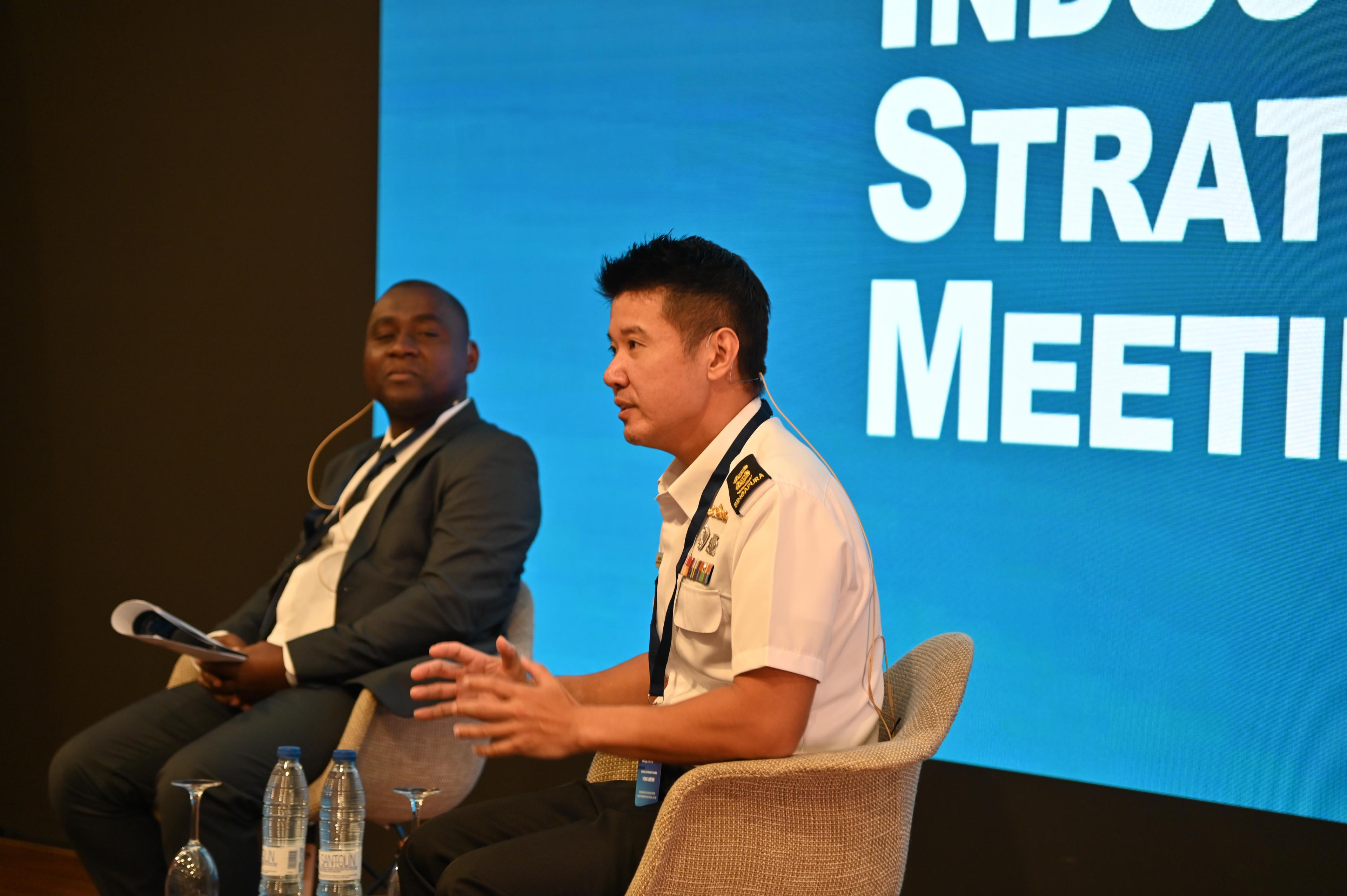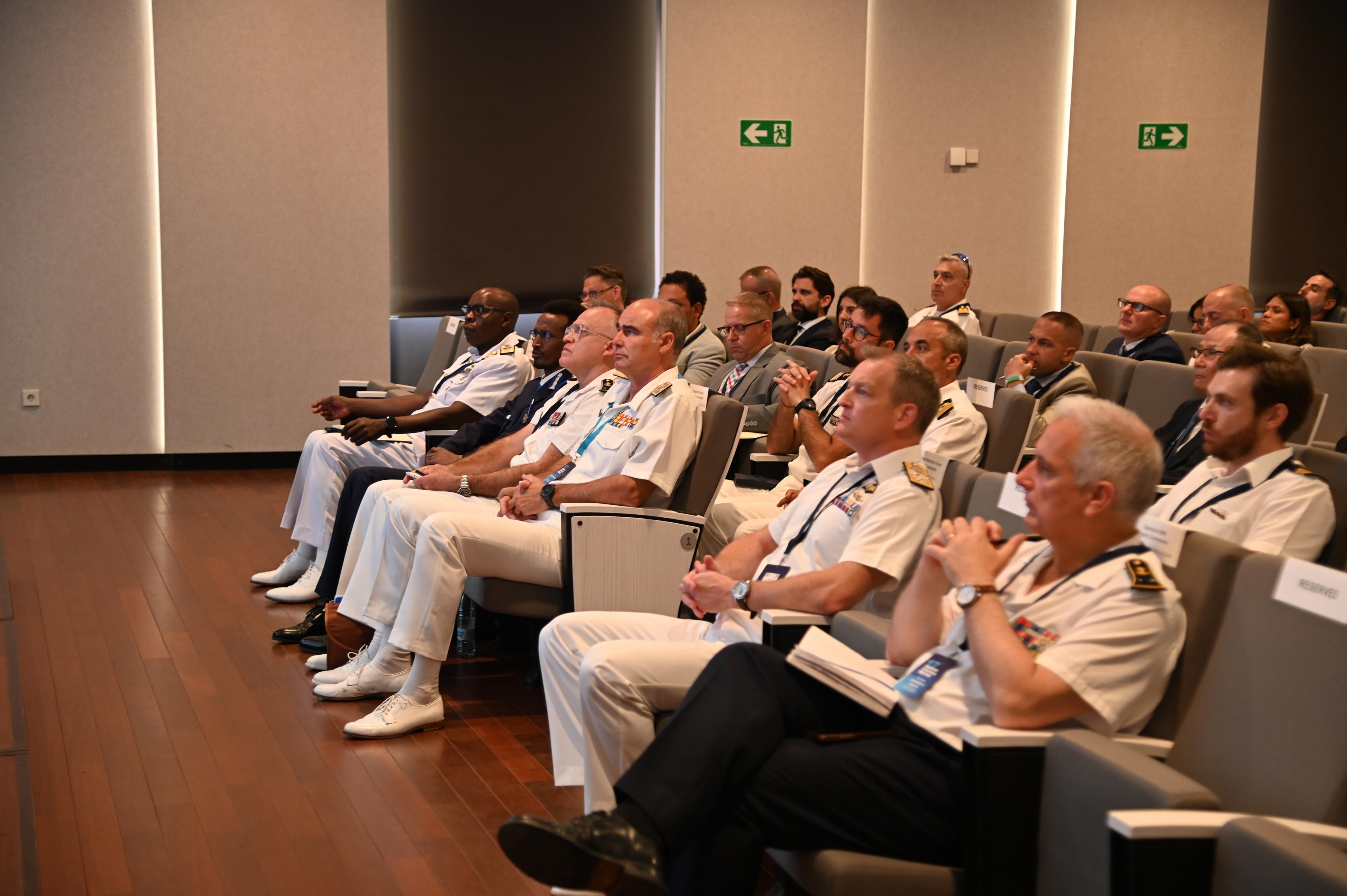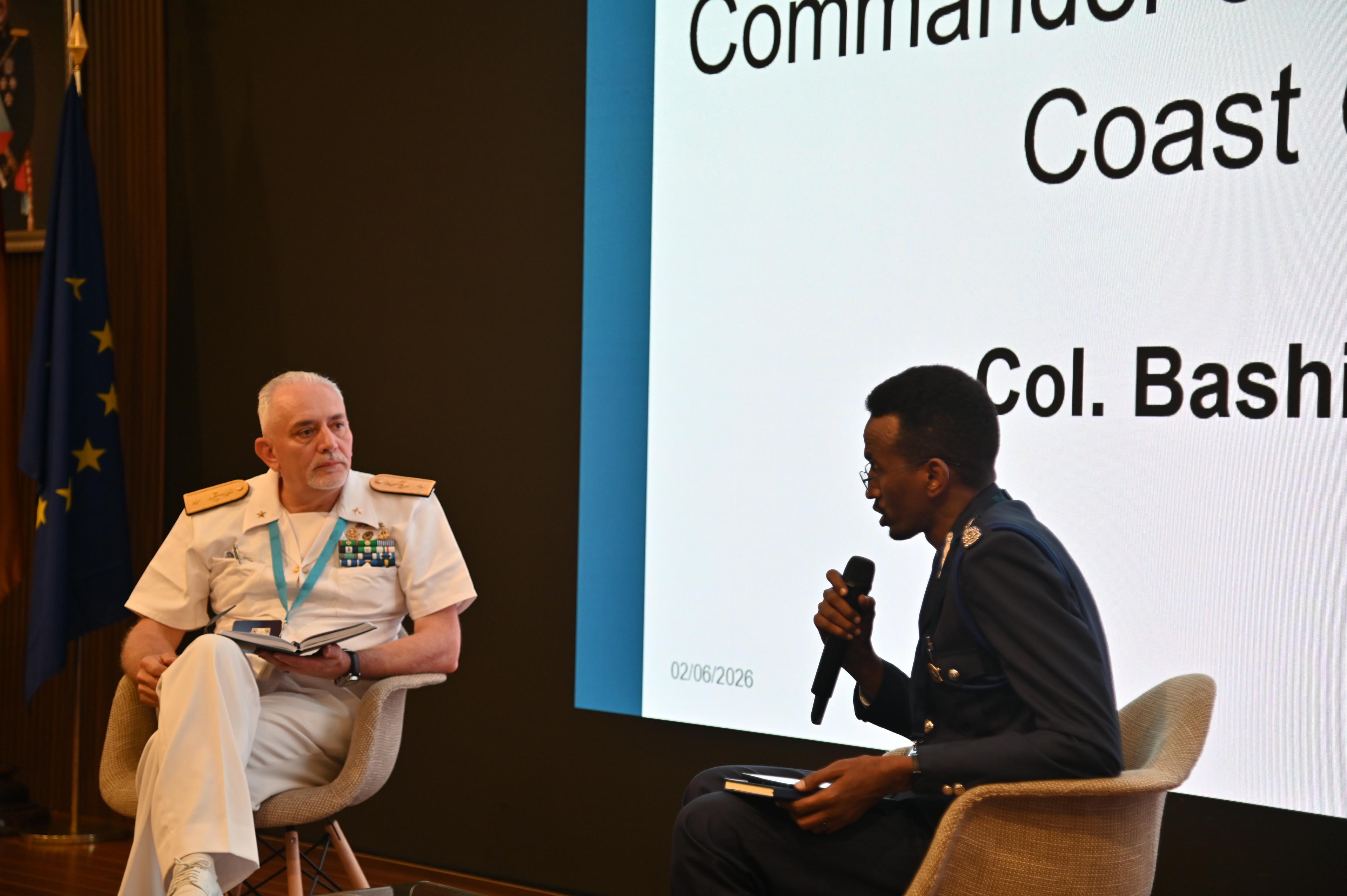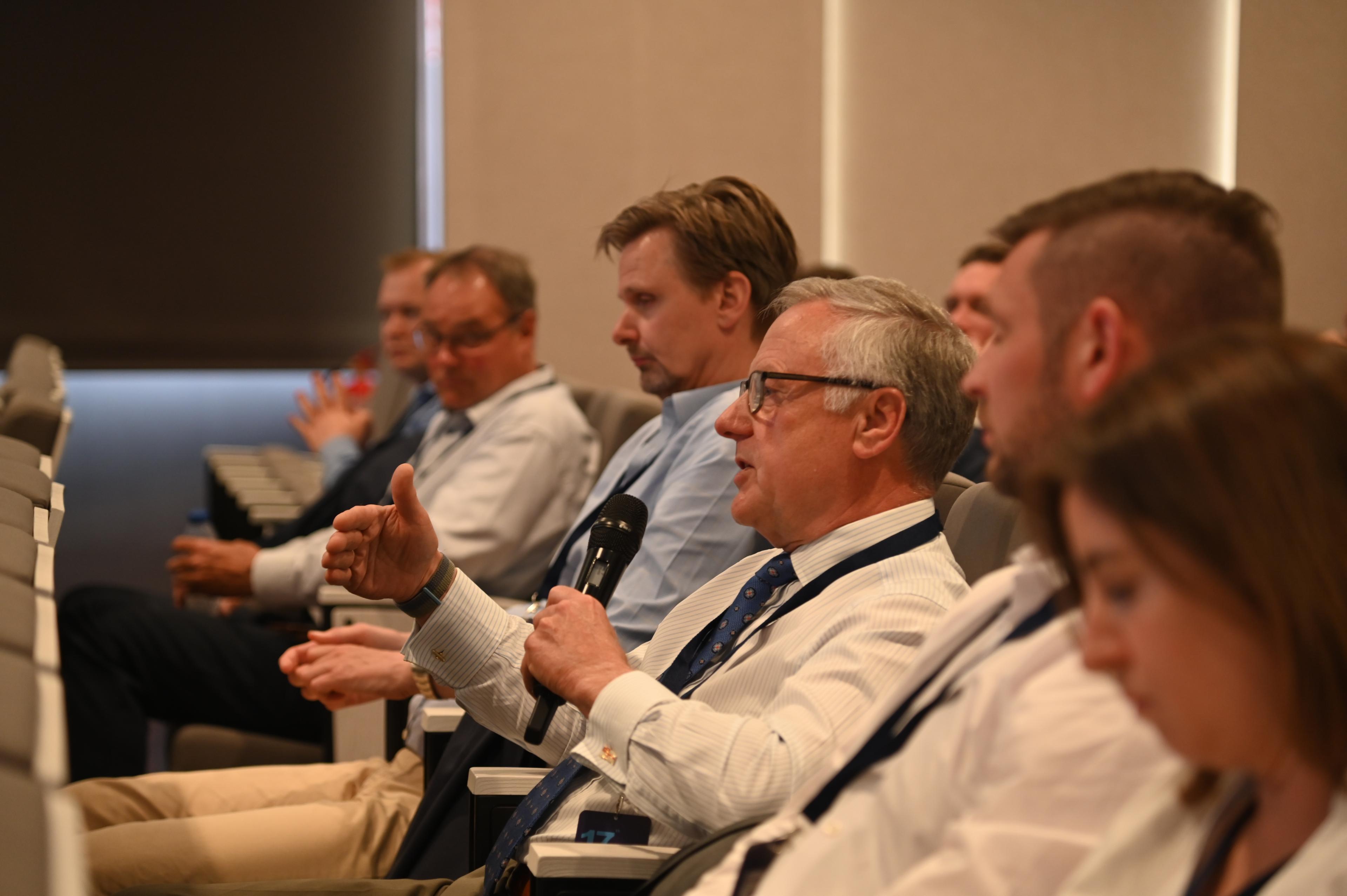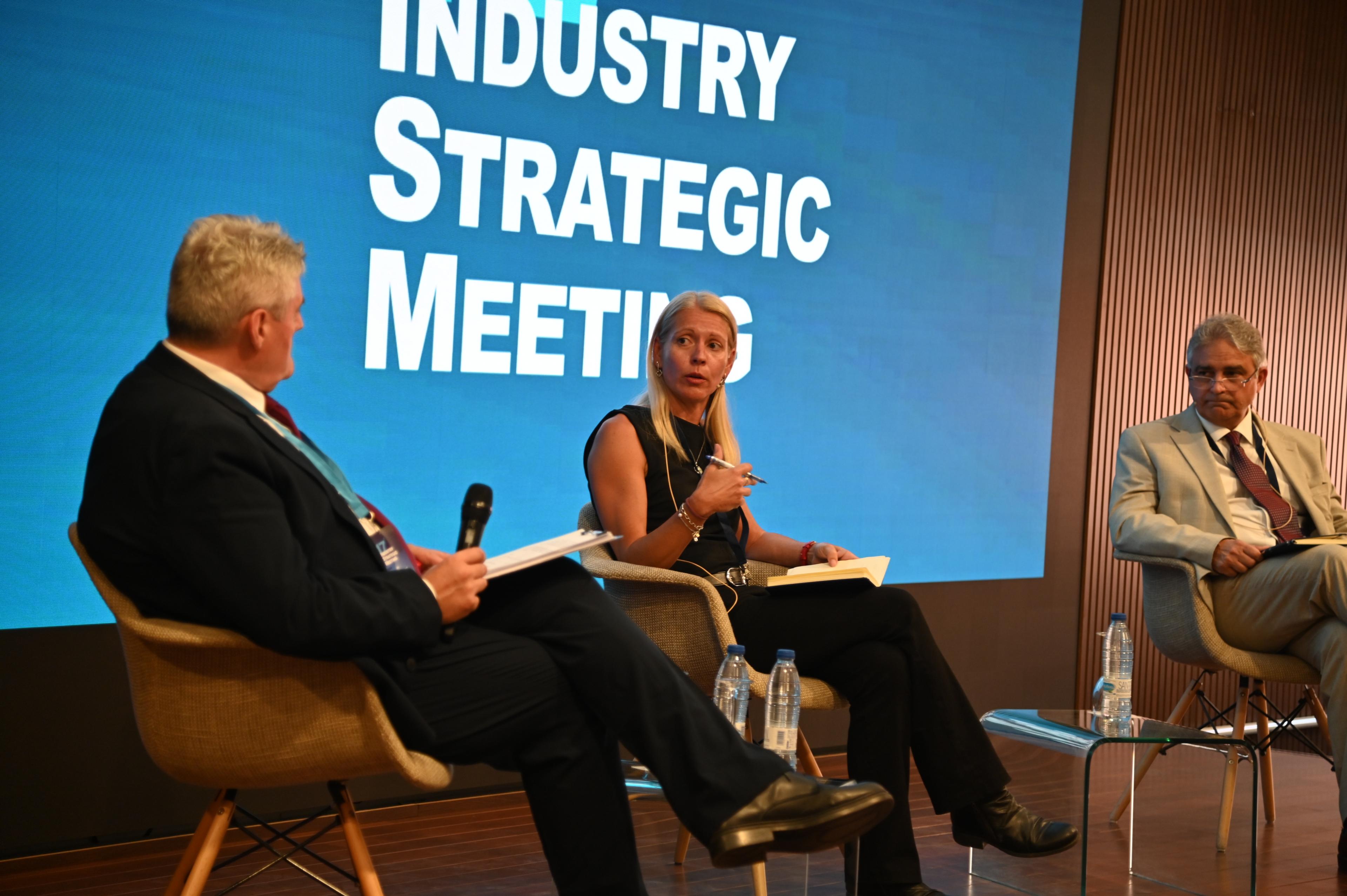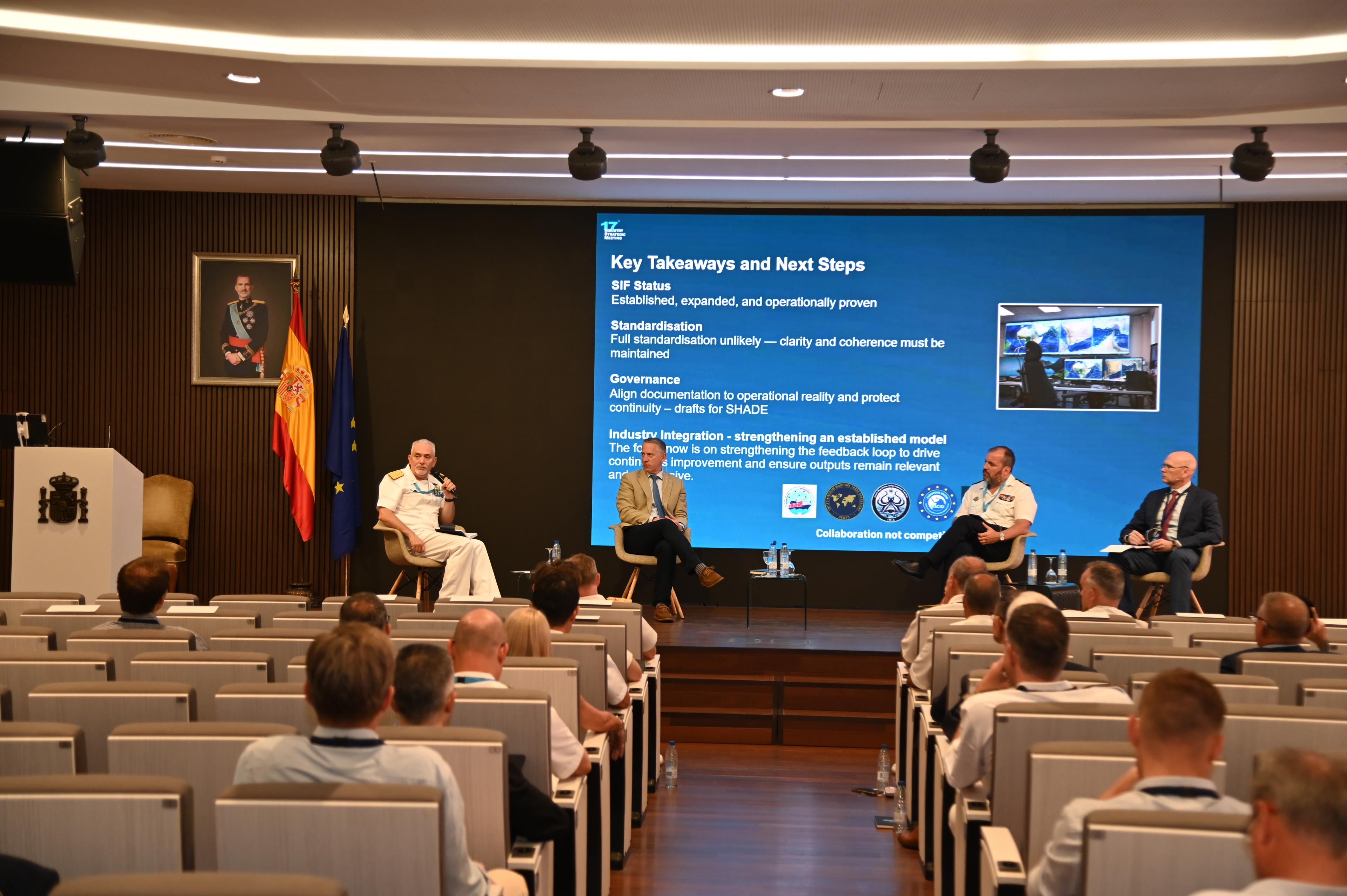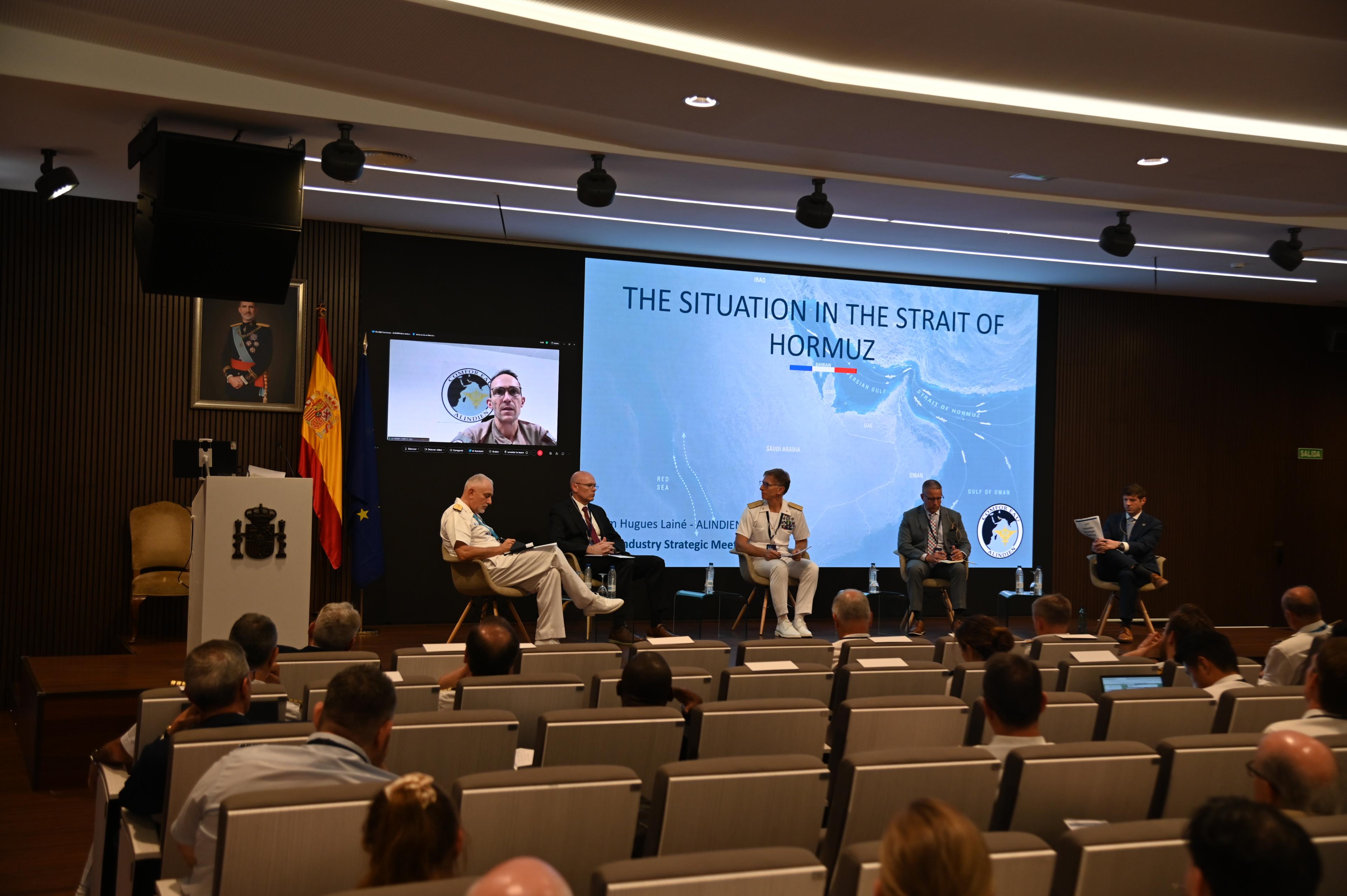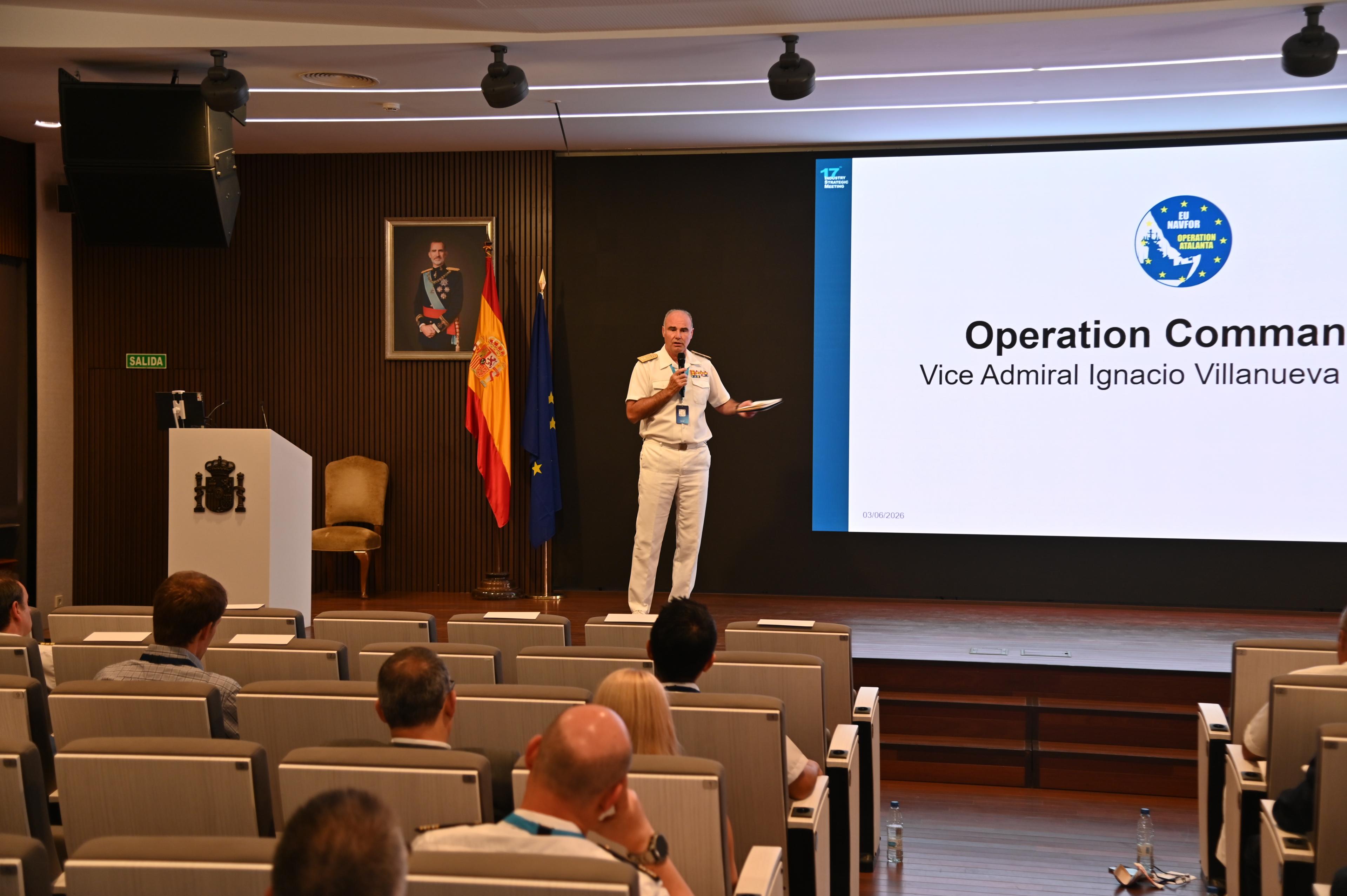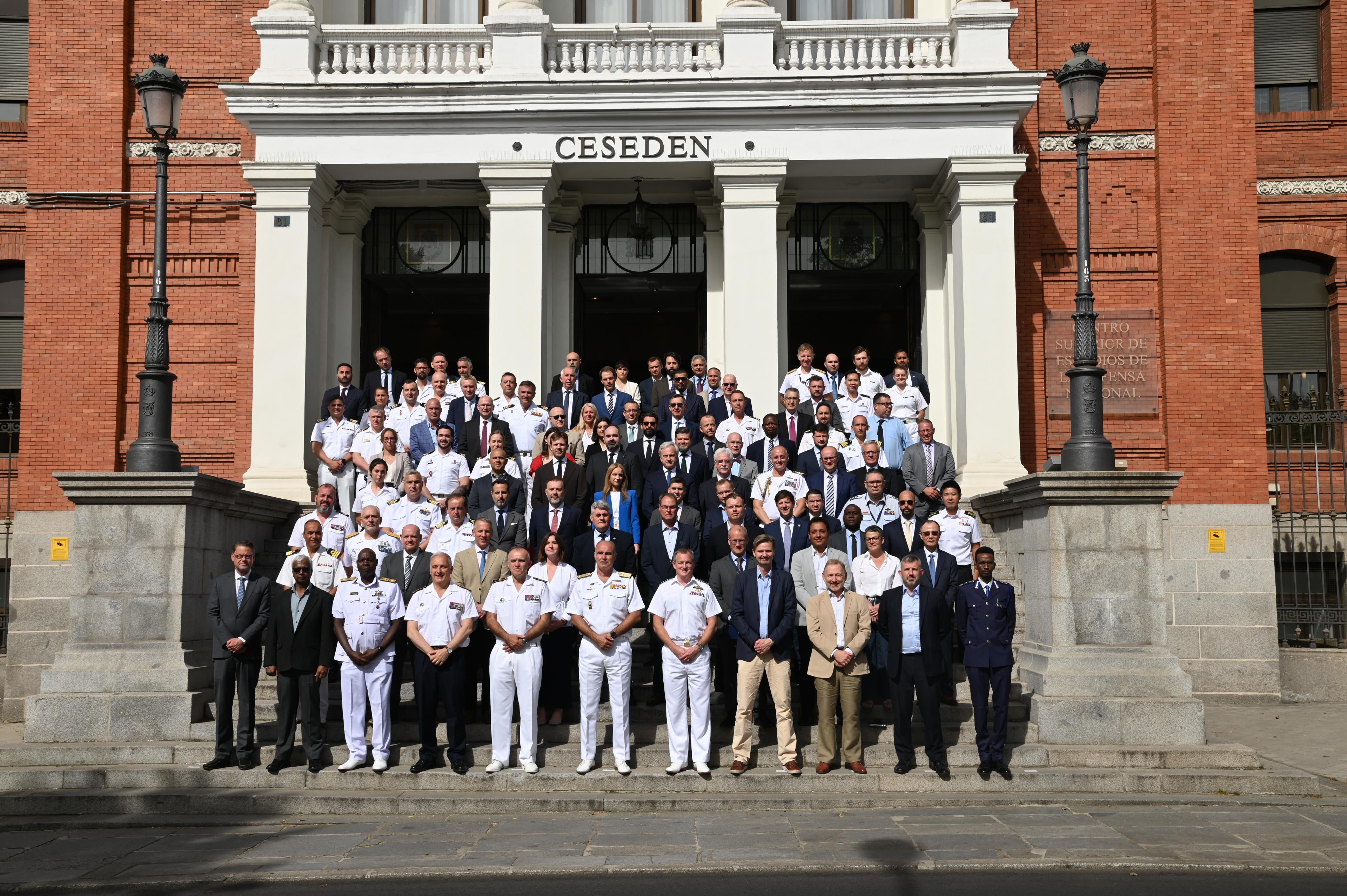
- From 2 to 3 June, Operation ATALANTA gathered around 100 participants in Madrid for the 17th Industry Strategic Meeting, bringing together representatives from the most significant maritime operations in the Indian Ocean and the Red Sea, along with key stakeholders from the shipping industry, including most significantly industry global associations and ECSA.
- This forum addressed critical challenges that naval operations and the shipping industry are facing due to the latest developments in the Strait of Hormuz derived from the armed conflict in the region, as well as evolving maritime security dynamics in the Red Sea, Gulf of Aden, and Northwest Indian Ocean.
The 17th Industry Strategic Meeting organised by the European Union Naval Force (EUNAVFOR) Operation ATALANTA and co-chaired by the Combined Maritime Forces (CMF) based in Bahrein, and EUNAVFOR ASPIDES, gathered from 2 to 3 June in Madrid together with the shipping industry, and other key organizations to discuss the current threats in the West Indian Ocean, the Strait of Hormuz and the Red Sea.
The two-day meeting brought together key stakeholders from across the maritime security spectrum, including representatives from international naval operations and regional naval forces, and maritime security centres beyond the region.
Besides the latest update on the crisis in the Strait of Hormuz provided by primary actors, another key objective of the meeting was to advance the collective strategic framework through enhanced coordination. Panels and presentations focused on the current reality of maritime security in the region.
The reality of Maritime Security in the region
During the first day, opening remarks from the main operations in the Indian Ocean set the scene. The meeting then focused on shaping the maritime security environment with information related to the EU Maritime Security Strategy in the region, a vision from the academic perspective, the importance of cooperation in the path to success against piracy, the situation and latest initiatives in the Strait of Hormuz. Then, the industry representatives provided their view on latest developments, with a special emphasis on the welfare of seafarers on board vessels trapped inside the Arabian Gulf, offered their insight on their shared assessment on how to enhance the current maritime security architecture in the region.
"Open, honest and transparent dialogue is key in ensuring military and industry partners continue to work effectively together. The world is ever changing and CMF remains steadfast in its mandate to uphold the rules based international order along with our partners present here at ISM." Commodore Dan Thomas, Combined Maritime Forces Deputy Commander on his inputs on the importance of this meeting.
During the second day, discussions revolved around information sharing with different panels, in which actors in the region and beyond provided their state of play and potential improvements. The essential role of Information Fusion Centers in support of maritime industry also were widely recognized by the audience. An animated invitation to register on the MSCIO website in line with the Single Information Framework was delivered to the Shipping Industry.
During his intervention, Rear Admiral Pierre-Yves Grente, ASPIDES Deputy Commander underlined: that, although last Houthi attacks occurred eight months ago, the current maritime security situation in the overall region remains highly volatile and demands the utmost caution. He emphasized the importance of maintaining close contact with the shipping industry, as mutual understanding and effective collaboration are essential to ensuring maritime security and preserving freedom of navigation. The current situation in the Strait of Hormuz is closely monitored, while European warships are close protecting and monitoring vessels in the straits of Bab-El-Mandeb on a daily basis.
Sharing information
The Industry Strategic Meeting is the ideal forum where participants from the global shipping industry meet maritime operations and maritime information and security centres representatives, such as the Maritime Security Centre Indian Ocean (MSCIO), the United Kingdom Maritime Trade Organization (UKMTO), the Joint Maritime Information Center (JMIC), the Information Fusion Center in Singapore, as well as the EU-supported Regional Maritime Information Fusion Center Madagascar.
For the closing remarks, Vice Admiral Ignacio Villanueva Serrano, Operation Commander European Naval Force Operation ATALANTA, reminded the importance of these meetings to further continue the collaboration between actors in the region, “we know where we were, where we are, and where we are going. I am very proud of the work we have done together to contribute to ensuring the transit at sea. The Industry Strategic Meeting and the SHADE conferences will continue to grow in importance, and we are ready to step forward in our commitment to the shipping industry sector“.