Dear reader,
The month of July was marked by two significant yet distinct events.
The first was the visit of the High Representative/Vice-President Kaja Kallas to the Operation’s flagship ESPS NUMANCIA in Djibouti, undertaken as part of her tour of European Union operations in the region. The High Representative was able to observe at first hand the capabilities, procedures and challenges facing the ATALANTA, as well as the prevailing security situation in the region. Her commitment and support for the Operation provide renewed impetus to continue our work with determination as contributors to maritime security in the West Indian Ocean.
The second event was another act of piracy involving the hijacking of the Motor Tanker ASANA. This vessel joins the three that are held captive by pirates: HONOUR 25, SWARD and EUREKA. All four vessels remain at anchor off the North-eastern coast of Somalia, within the country’s territorial waters. All available resources of the Operation continue to monitor closely every movement of these vessels, which constitute our highest priority. Continuous contact is maintained with Somali law enforcement agencies, particularly the Puntland Maritime Police Force (PMPF), as well as with representatives of the ships’ operating companies and the respective flag administrations. ATALANTA remains fully committed to achieving a successful resolution of all four cases and will sustain its efforts until this objective is reached, as well as expresses its concern for the welfare of hostages, and sincere sympathy for their families’ dramatic moments.
Finally, progress continues on monitoring of the “Shadow Fleet” within the Area of Operation. ATALANTA has taken the necessary steps to conduct boarding operations to verify the flag of vessels suspected of belonging to this fleet under European Union sanctions. Once more, the Operation is demonstrating its capacity and readiness to meet the requirements of European Union external action, in this instance as part of the coordinated effort of its maritime operations to disrupt this menace.
Vice Admiral Ignacio Villanueva Serrano
EUNAVFOR ATALANTA Operation Commander
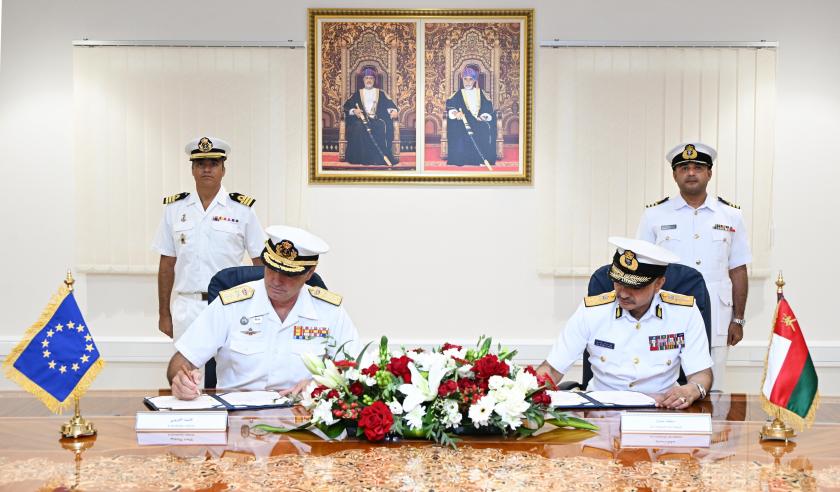
On 6 July, the Protocol for Coordination and Cooperation between the Maritime Security Centre of Oman and EUNAVFOR Operation ATALANTA was renewed for another two years.
The protocol was signed by Rear Admiral Bahri Saif bin Nasser Al Rahbi, Commander of the Royal Navy of Oman and Chairman of the Maritime Security Committee, and Vice Admiral Ignacio Villanueva, Commander of Operation ATALANTA.
The protocol facilitates the exchange of information on vessel movement, maritime activities, and potential threats. It is the basis for a shared understanding of the maritime situation between partners.
ATALANTA and Oman maintain a long and very trustful cooperation in maritime security. Beside the close relationship with Oman’s Maritime Security Centre, ATALANTA conducts regular exercises with the Royal Omani Navy as well as calls to Omani ports, as they are very significant logistic ports for the Operation.
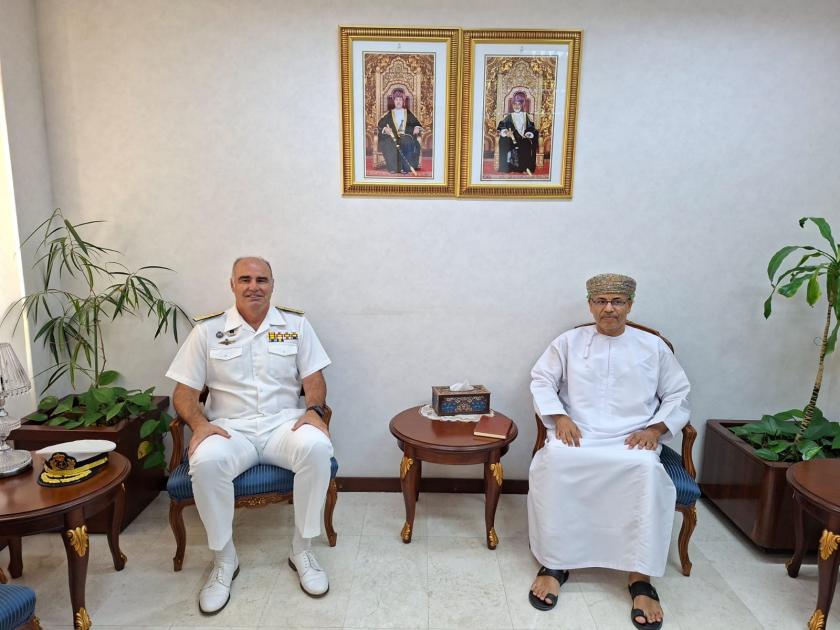
On 7 July, following the signing of the protocol, ATALANTA Operation Commander paid a courtesy visit to the Sultanate’s Ministry of Foreign Affairs. He was received by the Head of Office of Continental Shelf and Maritime Affairs, Mr. Thani bin Harith bin Nasser Al Mahrouqi, and had the opportunity to discuss aspects of the renewed protocol and the security situation in the region.
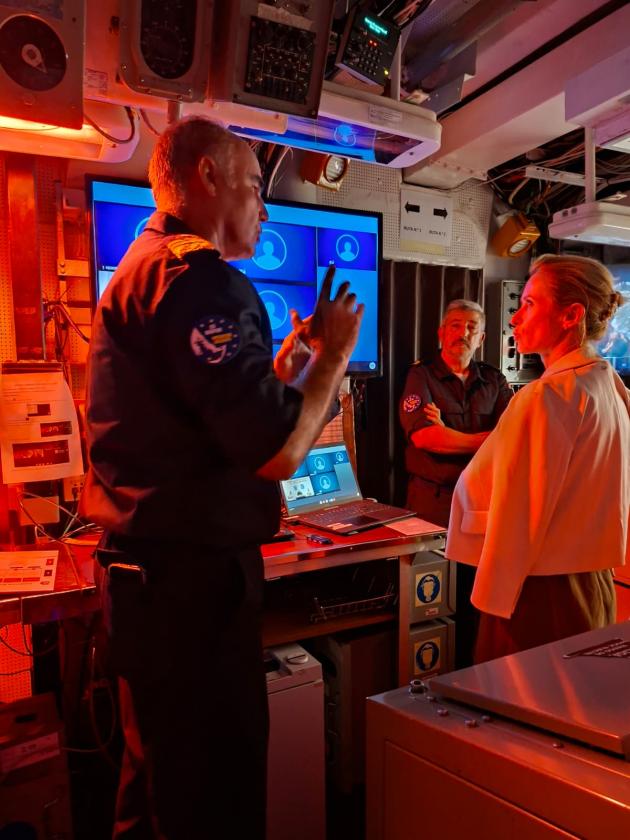
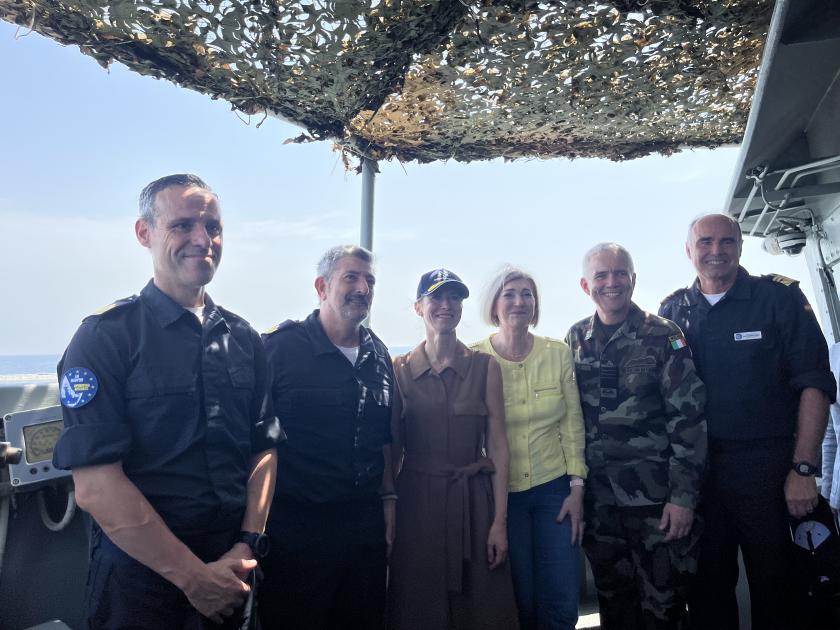
On 16 July, the High Representative of the European Union, Kaja Kallas visited the flagship of Operation ATALANTA, ESPS NUMANCIA. She was accompanied by the EU Ambassador to Djibouti, H.E. Mrs. Denisa-Elena Ionete, and the Chair of the European Union Military Committee, General Seán Clancy. ATALANTA Operation Commander, Vice Admiral Ignacio Villanueva Serrano together with the Force Commander, Rear Admiral Francisco Javier Vázquez Sanz, welcomed her on board.
The event took place as part of the visit of the High Representative to Djibouti where she also visited Operation ASPIDES and signed the EU-Djibouti Status of Forces Agreement for Operation ASPIDES.
Upon arrival, Vice Admiral Ignacio Villanueva, provided the High Representative insights on the current piracy situation and the main outputs provided by Operation ATALANTA’s work: “ATALANTA is as relevant as ever. We have a mandate that has evolved according to the situation, and our current work is developed with four main outputs: counter-piracy, industry connection, coordination in the area, and closing an EU strategic gap in the area as we are embedded in the regional maritime architecture”.
The visit also included a counter-piracy exercise in conjunction with the Operation Headquarters in Rota and a live demonstration of forces. The exercise focused on how the coordination for a counterpiracy action typically proceeds.
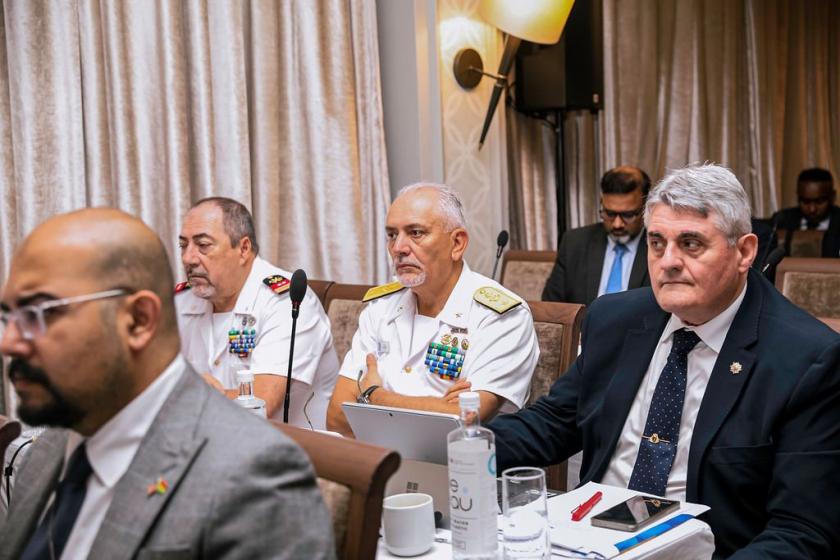
On 24 July, Operation ATALANTA Deputy Commander, Rear Admiral Paolo Fantoni along with the ATALANTA Shipping Advisor, participated in the third plenary session of the Contact Group on Illicit Maritime Activities (CGIMA) in Mauritius.
Operation ATALANTA briefed the distinguish audience on the current maritime security situation and trends in the Western Indian Ocean, and moderated two panels on information sharing and cooperation and coordination as key pillars for a robust Maritime Security Architecture.
CGIMA includes member states and regional organisations from the Western Indian Ocean, including the Indian Ocean Commission (IOC), alongside international partners such as Australia, Japan, India and the United States but also the People’s Republic of China and the Russian Federation.
The forum also brings together multilateral organisations, including the United Nations, the European Union and the African Union, as well as naval operations such as EUNAVFOR ATALANTA, EUNAVFOR ASPIDES, the Combined Maritime Forces and the United Kingdom Maritime Trade Operations.
Beyond tackling piracy and other maritime crimes, the Contact Group also promotes judicial cooperation, humanitarian assistance for crews affected by attacks at sea, and the protection of international shipping routes. This emphasizes the need for sustained international collaboration to address increasingly complex maritime security challenges.
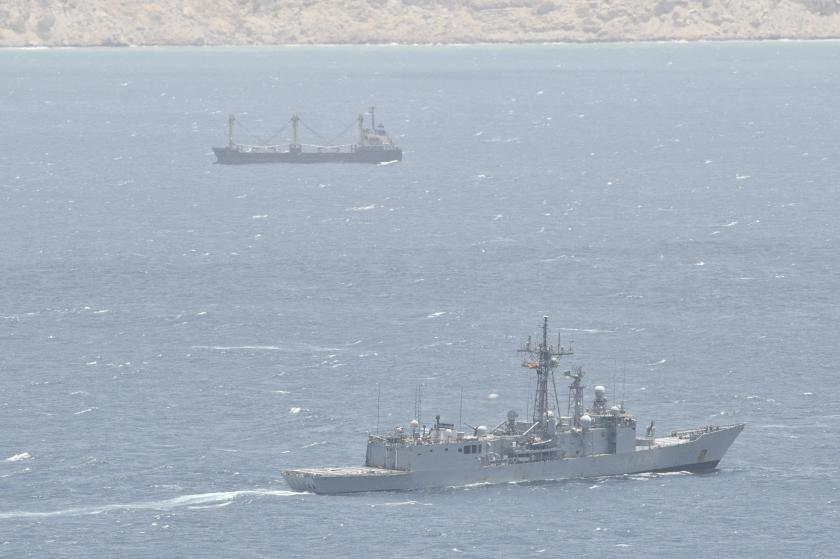
In July, EUNAVFOR ATALANTA continued monitoring the situation of the four ongoing piracy cases, exercising pressure to the pirate action groups in the area. ATALANTA forces are in direct contact with Somali law enforcement agencies, and exchange relevant information effectively about the four piracy incidents. The four pirated vessels are anchored in the northeast coast of Somalia, inside territorial waters, very close to the coast, and maintaining a short distance amongst them.
Since the first piracy incident occurred, ATALANTA’s Maritime Security Centre Indian Ocean (MSCIO) issued alerts to all vessels sailing in the vicinity to maintain heightened vigilance, adhere to Best Management Practices – Maritime Security, and report immediately any suspicious activity or relevant information to MSCIO and UKMTO.
ATALANTA maintains close contact with the owners of the vessels, and has stablished a direct link with their flag states.
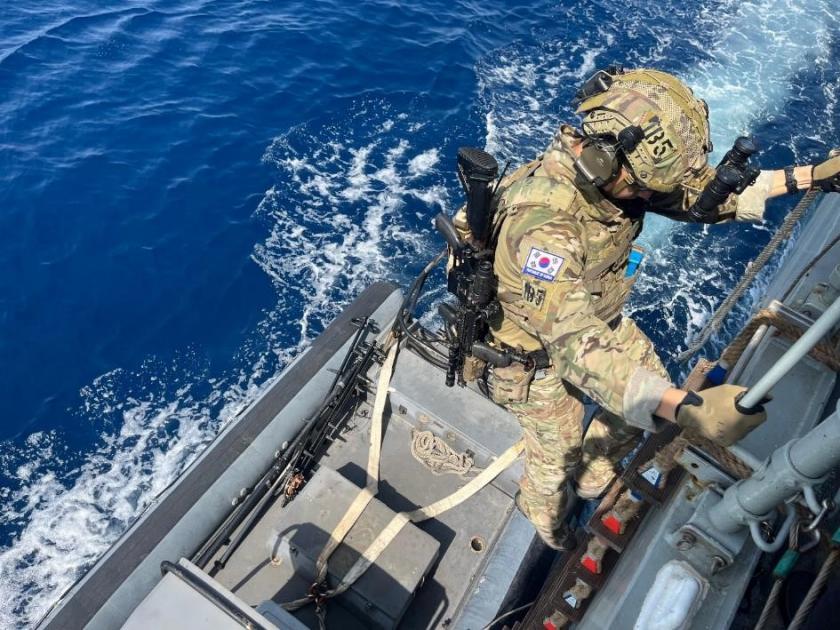
On 15 July, EUNAVFOR ATALANTA flagship ESPS NUMANCIA and Republic of Soth Korea Ship WANG GEON, belonging to Combined Maritime Forces 151 Task Force, met at sea for a joint counter-piracy drill.
The activities included Visit, Board, Search and Seizure (VBSS) and different manouvres on board of both ships.
These joint exercises are conducted on a regular basis within the framework of the close cooperation and mutual trust between both forces, which are fully committed to counter piracy in the Western Indian Ocean.
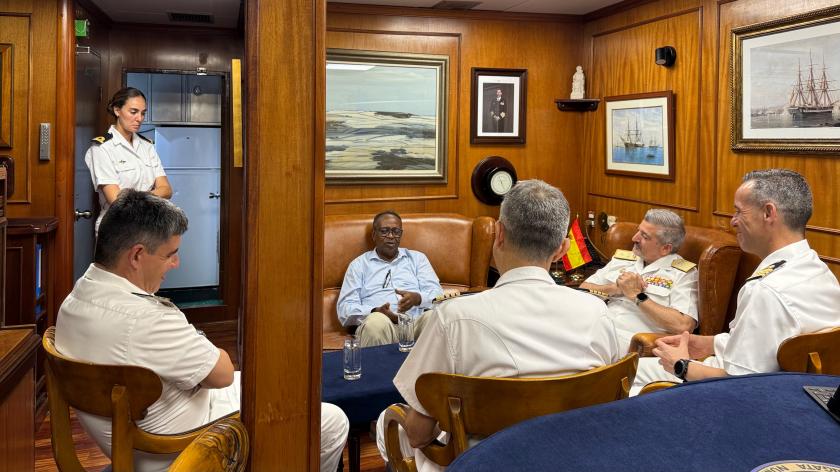
On 30 July, during a port visit in Djibouti, ATALANTA Force Commander Rear Admiral Javier Vázquez welcomed Djibouti Port Master Captain Mohamed Moussa Abar.
.
The meeting provided an opportunity to strengthen ties and improve the efficiency of future port visits. Captain Moussa expressed his appreciation to ATALANTA for providing protection to the shipping industry in the region, particularly in the vicinity of the port.
Djibouti remains a crucial partner for ATALANTA, hosting the operation’s logistic hub and cooperating in joint maritime security activities.
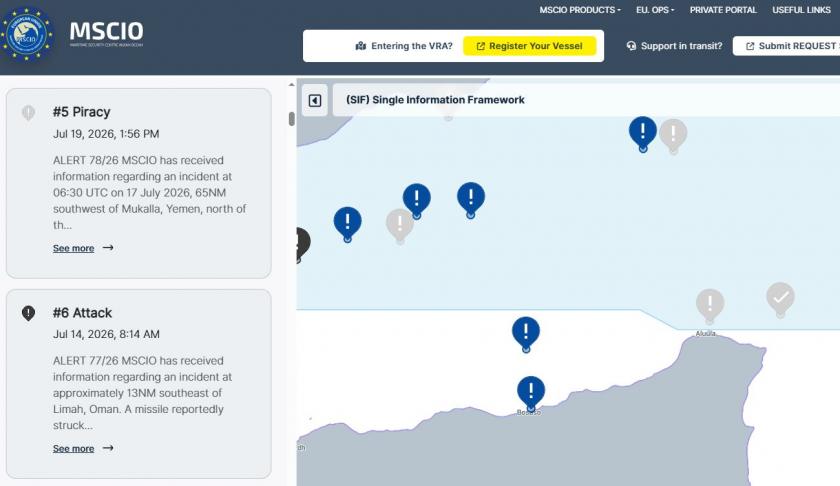
In July, the EUNAVFOR ATALANTA Maritime Security Centre Indian Ocean (MSCIO) published on the MSCIO website 14 alerts related to various incidents in the Area of operation, including the piracy case involving the merchant vessel ASANA.
In addition, EUNAVFOR Operation ATALANTA social media posts and website promoted those alerts reported and published by MSCIO. They are produced in close cooperation with United Kingdom Maritime Trade Operations (UKMTO) and underline the importance of real-time communication and coordinated efforts between regional and international maritime security stakeholders to ensure the security of vessels transiting high-threat areas.
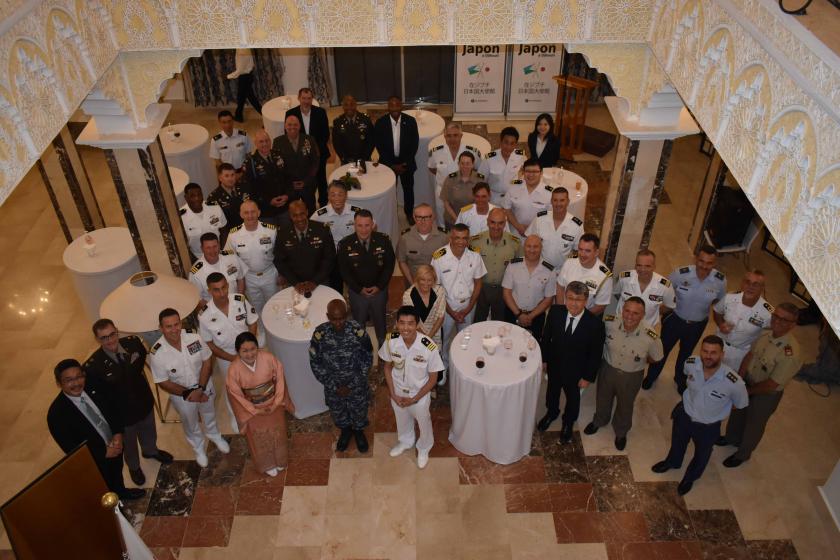
On 2 July, Operation ATALANTA and Japan’s Self-Defence Forces have reaffirmed their cooperation during an official ceremony held at the Japanese Embassy in Djibouti. The event, which marked the formal handover to Japan’s new defence leadership, served to consolidate their joint commitment to maritime stability and security in the Indian Ocean and the Gulf of Aden.
The ceremony was attended by a military delegation led by the ATALANTA ORION Tactical Air Detachment.
Both forces cooperate regularly in this strategic theatre. Naval and air units work in a coordinated manner to monitor the maritime area and protect one of the world’s busiest trade routes.
Japan operates in the area both independently and as part of the Combined Maritime Forces (CMF). In both cases, it maintains close coordination with the assets of Operation ATALANTA.
The meeting also brought together military representatives from other allied nations deployed in the region, highlighting the multinational approach to security in the Horn of Africa. Such institutional events not only strengthen diplomatic relations in the defence sector but also promote genuine interoperability between contingents on the ground.
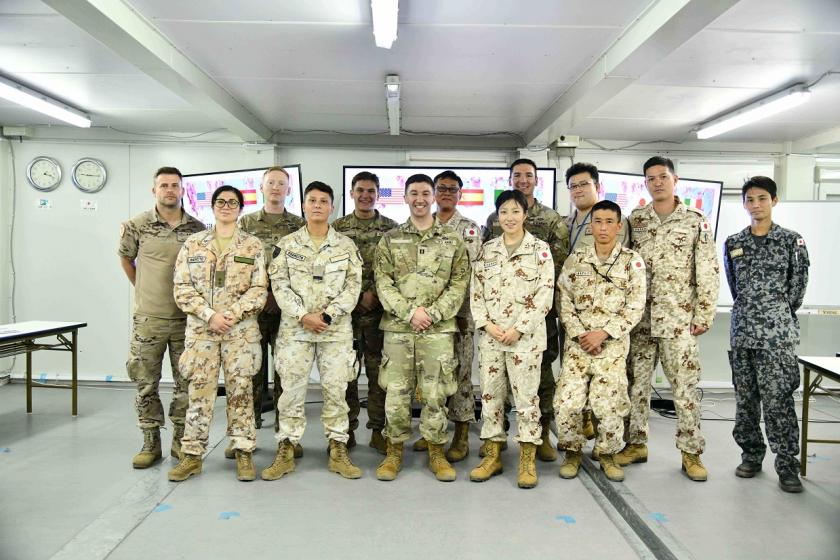
On 7 July, ATALANTA ORION Detachment personnel participated in a Civil-Military Cooperation (CIMIC) coordination meeting together with military representatives from the US, Italian and Japanese contingents. The meeting took place at the Japanese Base in Djibouti.
Conducted in a cooperative atmosphere, the meeting strengthened working relations among the various actors involved in CIMIC activities in the Area of operation.
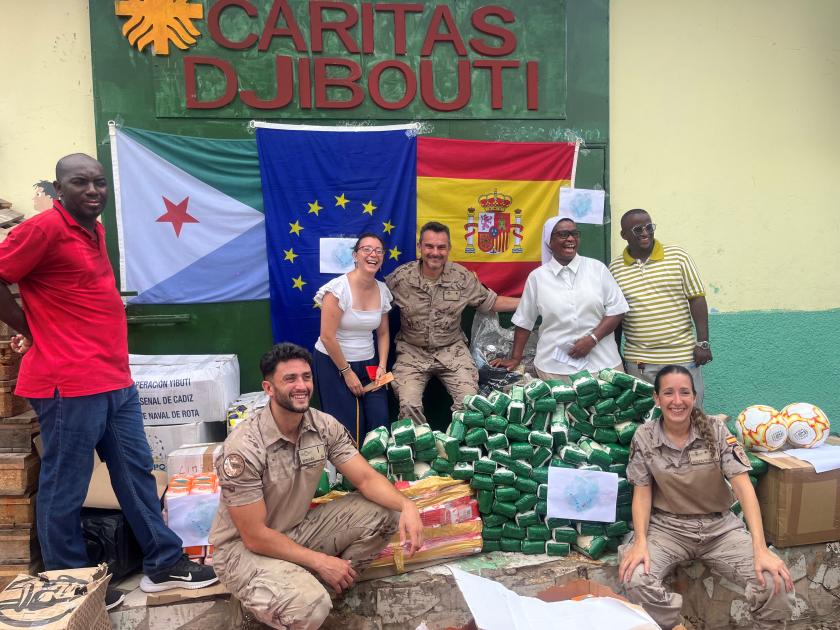
The ORION Detachment of Operation ATALANTA delivered two donations to Caritas Djibouti in July, aimed at meeting the basic needs of the country’s most vulnerable civilians. The donations included staple foods such as rice, flour and sugar, along with clothing, hygiene products, school supplies and toys for children.
Caritas Djibouti expressed its gratitude for the support and noted that it would help the organisation to continue its humanitarian aid efforts among the most disadvantaged communities.
Through this initiative, the ATALANTA and the ORION Detachment reaffirm their commitment to civil-military cooperation and to the people of Djibouti, complementing the detachment’s operational efforts and contributing to the stability and well-being of the region.
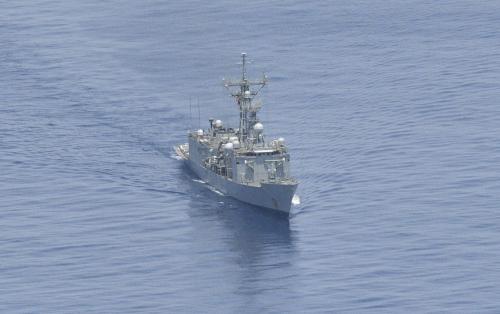
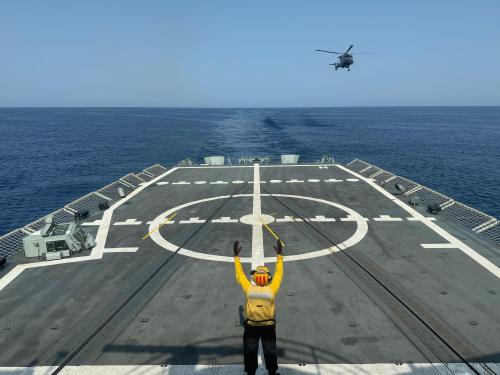
In July, EUNAVFOR ATALANTA was supported in different levels by ships from Spain, Italy, France and Greece.
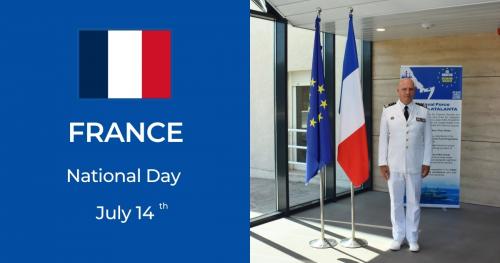
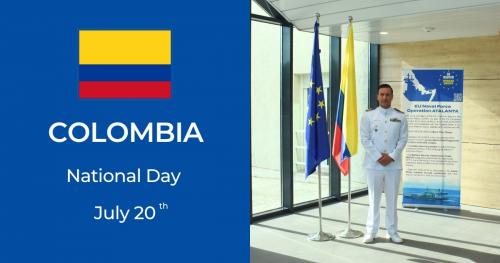
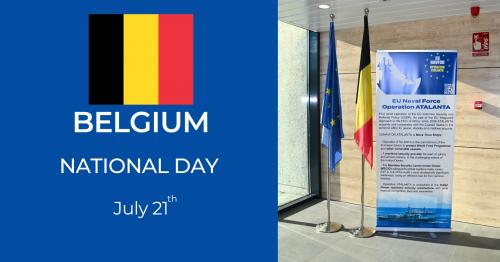
In July, EUNAVFOR ATALANTA celebrated the following national days:
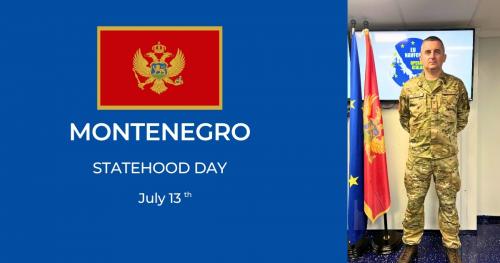
Also, ATALANTA joined to the celebration of the following partner’s day: