Dear reader,
I would like to begin my words by highlighting the intense activity carried out by the Operation, particularly by our personnel and assets in the area of operation.
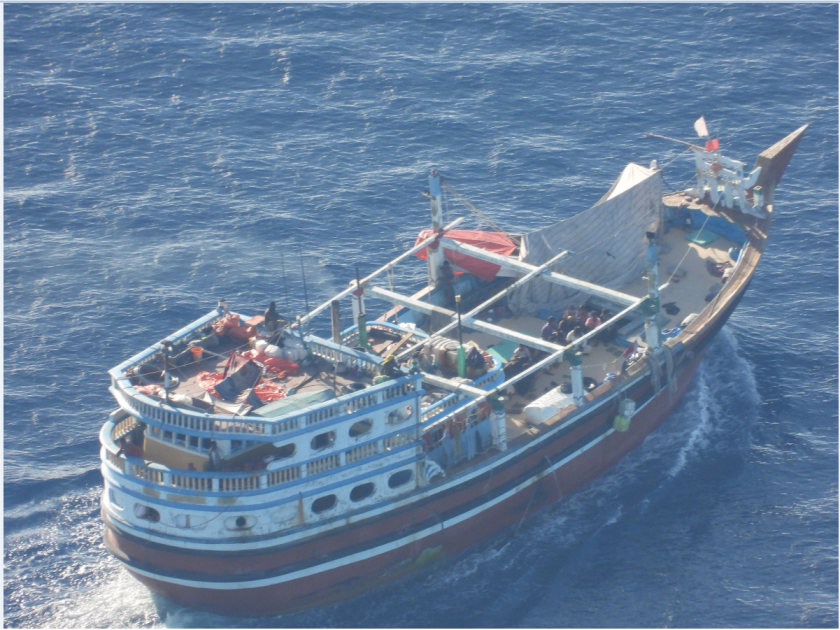
Turning to the most urgent issue, the hijacking of the Iranian-flagged fishing vessel ALWASEEMI has once again underscored the need for constant preparedness and high readiness to act effectively and decisively to any piracy threat in the region. ATALANTA forces, by preventing further hostile actions and maintaining close and continuous surveillance of the dhow, have successfully neutralised the threat. It is also essential to emphasise the permanent coordination with the Somali police forces, which is still ongoing to apprehend those responsible and bring them to justice.
At a strategic level, my presentation to the Political Security Committee, providing an update on the operation, its activities and the challenges faced, as well as my attendance at the EU Ambassadors’ Conference, underline the relevance of ATALANTA as a strategic tool for the EU’s maritime security and naval diplomacy in the western Indian Ocean.
In the area of operation, the deployment of two surface vessels has enhanced our ability to act with greater responsiveness and precision. This is reflected both in the handling to the recent piracy incident and in the numerous activities carried out by the vessels, supported by the Maritime Patrol and Reconnaissance Aircraft. With these assets, the Force Commander is able to take timely and coordinated action across the area of operation.
Also noteworthy is the support provided over several days by the French Task Group Jeanne D’Arc, which further demonstrate France’s commitment as a contributing EU Member State to ATALANTA, in addition to the personnel and logistical support it already provides. The integration of the French Task Group with ATALANTA assets proves the EU’s capabilities to adapt the Operation to evolving circumstances in the area.
ATALANTA’s daily dedication to fulfilling its tasks – always within our mandate, under the framework of UNCLOS, and regardless of the flag of the vessel in distress – is what sets us apart as a benchmark for maritime security in the Western Indian Ocean.
Vice Admiral Ignacio Villanueva Serrano
EUNAVFOR ATALANTA Operation Commander
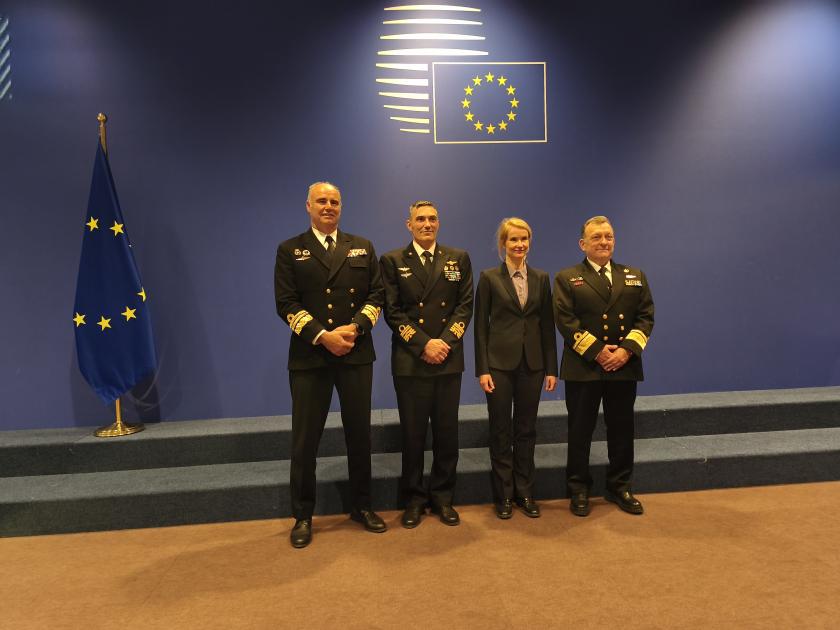
On 5 March, Vice Admiral Ignacio Villanueva Serrano, ATALANTA Operation Commander, met with Ambassador Lene Mandel Vensild, Chair of the Political and Security Committee. He was joined by the Operation Commanders of the other European Union CSDP Maritime Operations, EUNAVFOR Operation ASPIDES and Operation EUNAVFOR MED IRINI prior to providing an update to the Political and Security Committee.
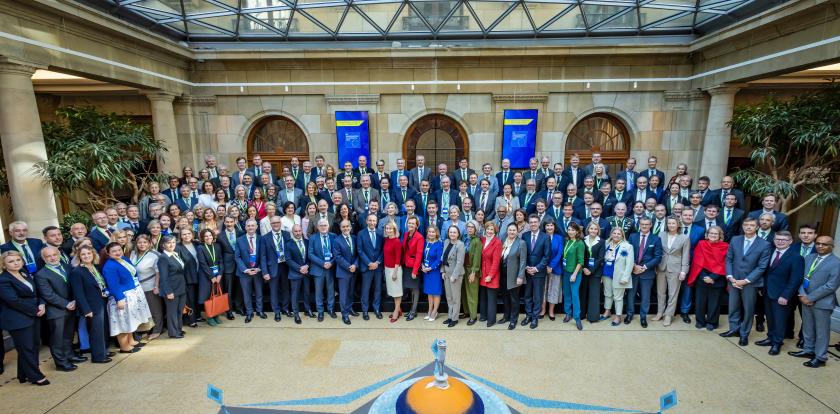
On 9 March, ATALANTA Operation Commander attended the EU Ambassadors’ Conference in Brussels. This annual strategic meeting of the European Union’s diplomatic leadership allows participants to review global developments, align priorities and reinforce the coherence and effectiveness of EU external action.
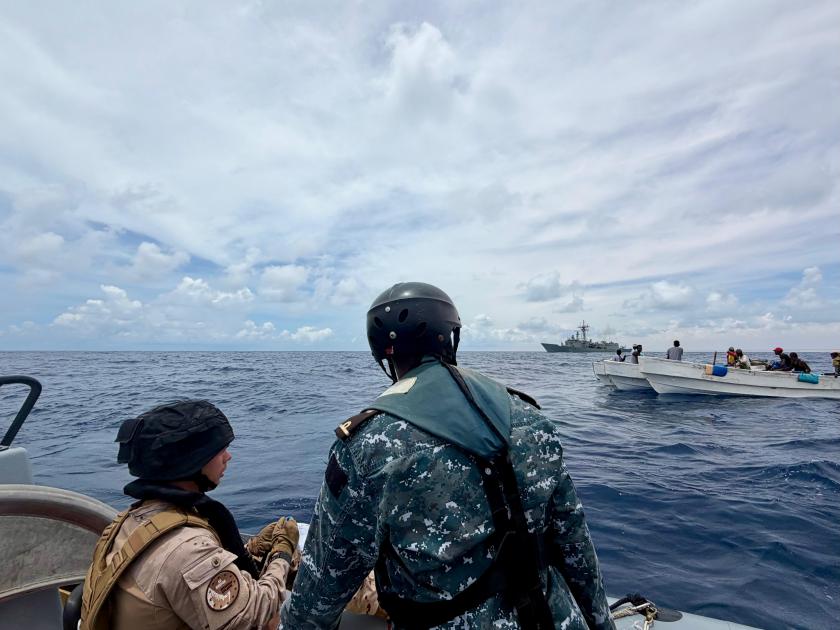
In March, EUNAVFOR ATALANTA assets conducted multiple friendly approaches to local fishing vessels. During these encounters, ATALANTA forces take the opportunity to check on the crew's conditions on board and their concerns about suspicious activities at sea, such as piracy or illegal fishing. It also improves mutual understanding, builds confidence in the Operation and raises awareness of the security situation in the area.
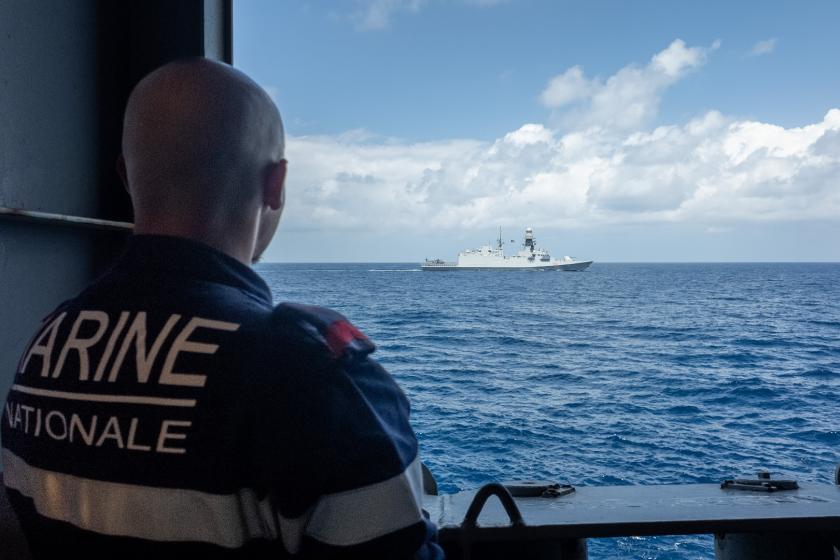
On 5 March, the ATALANTA flagship, ITS BIANCHI, and the French Task Group JEANNE D’ARC conducted a joint exercise off the coast of Somalia.
The French Task Group JEANNE D’ARC is participating in ATALANTA during her transit in the Western Indian Ocean, as part of her annual deployment.
The interaction between EU units ensures effectiveness and interoperability during regular operations to address maritime security threats such as piracy and drug trafficking in the Western Indian Ocean.
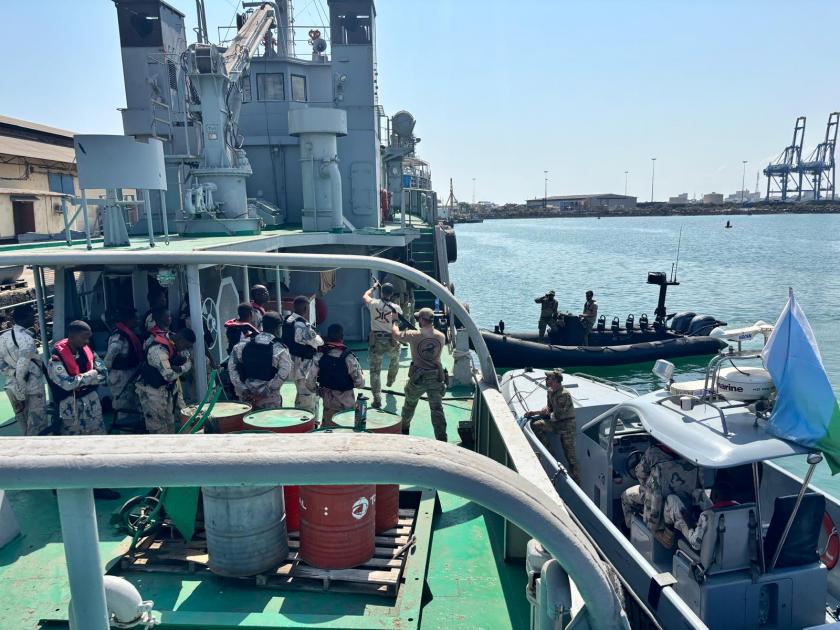
In early March, training exercises involving ATALANTA forces, deployed in Djibouti prior embarkation, and personnel from the Djibouti Coast Guard took place.
For more than two weeks, the training included Visit, Board, Search, and Seizure exercises, non-cooperative boarding, and emergency medical assistance training.
ATALANTA is fully committed to supporting regional states in maintaining maritime security and enhancing their capabilities.
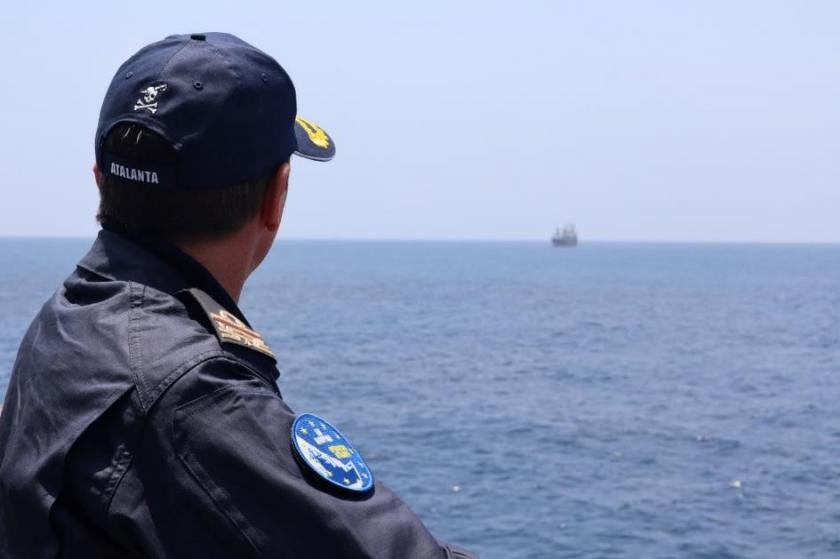
On 16 March, Operation ATALANTA flagship ITS BIANCHI escorted World Food Programme Merchant Vessel OCEAN BENEFIT through the Western Indian Ocean. Protecting World Food Programme vessels and other vulnerable vessels remains at the core of ATALANTA’s mandate.
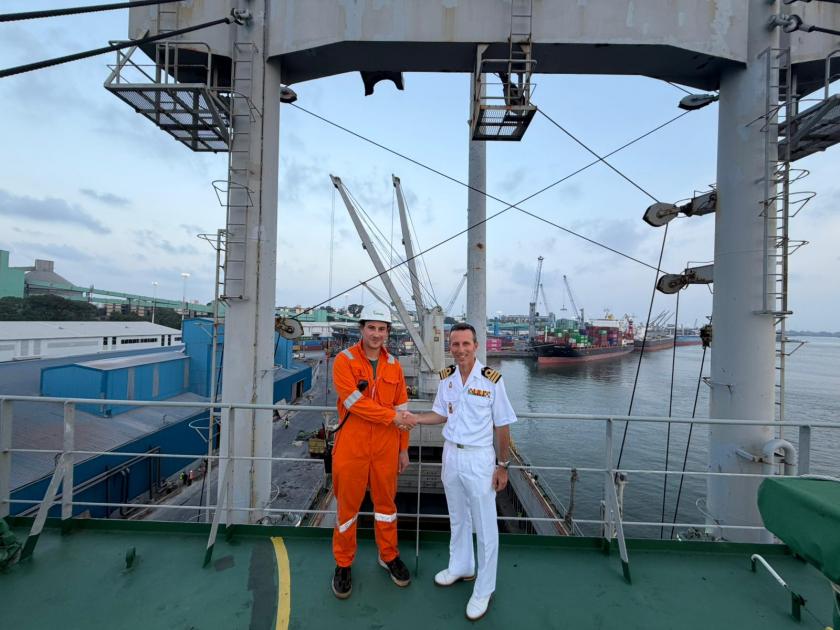
Following the interaction at sea, the Commanding Officer of ESPS CANARIAS and his delegation paid a visit to the MV OCEAN BENEFIT. The visit took place during the port call in Mombasa, where both ships were moored for a logistical stopover.
Once again, Operation ATALANTA forces streesed the commitment to protect the WFP vessels in delivering humanitarian aids in Somalia and other countries in the region.
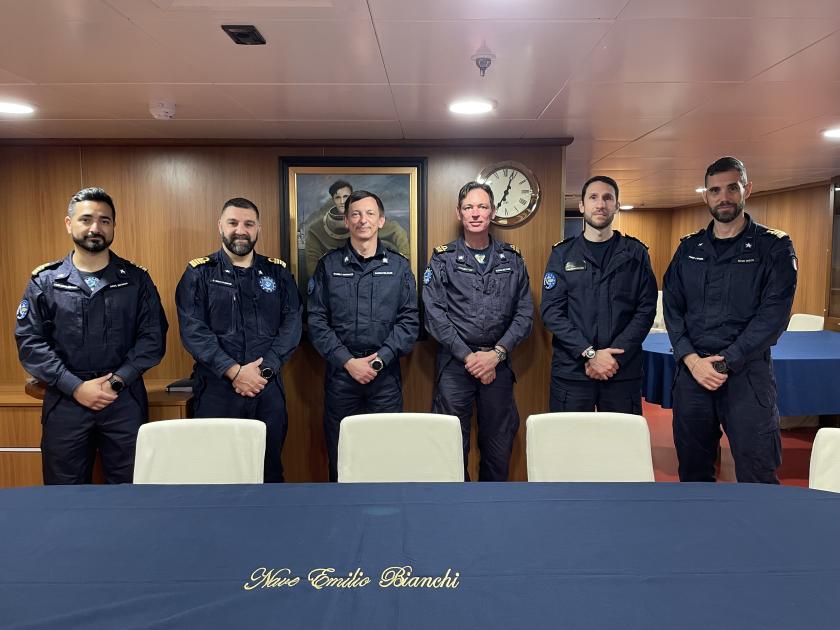
On 22 March 2026, Rear Admiral Daniele Paolo Martinuzzi, EUNAVFOR ATALANTA Force Commander, welcomed Rear Admiral Milos ARGENTON, EUNAVFOR Operation ASPIDES Force Commander, on board the ATALANTA flagship ITS BIANCHI. Both admirals exchanged experiences and impressions on the evolution of the maritime security situation in the region, and challenges faced to accomplishing their respective tasks as EU CSDP operations.
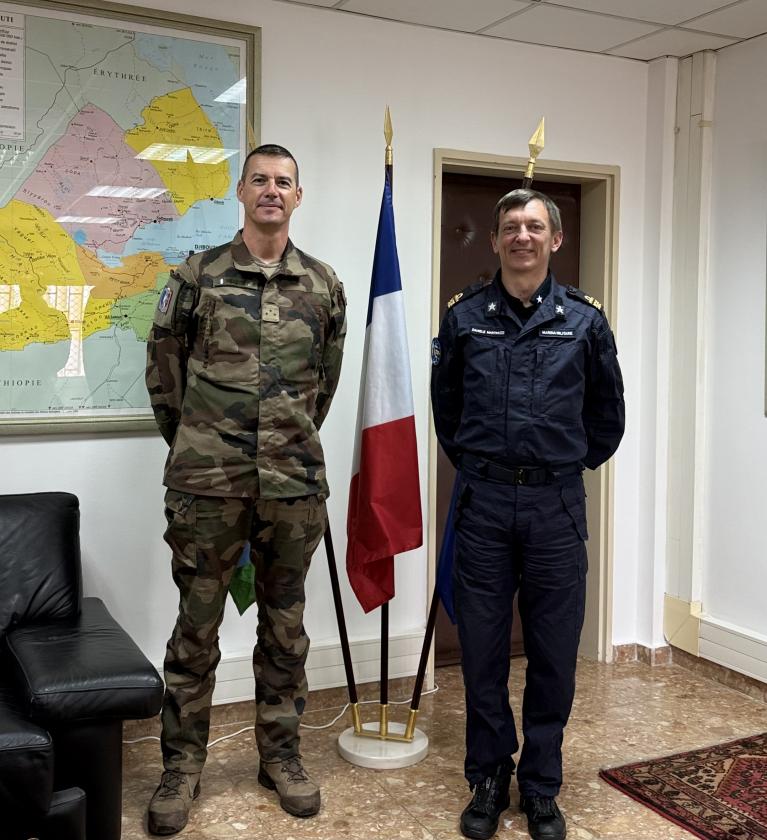
On 23 March 2026, Rear Admiral Daniele Paolo Martinuzzi paid a visit to General Sébastien Vallette, the Commander of the French Forces stationed in Djibouti. He had the opportunity to introduce himself as current ATALANTA Force Commander, and highlight the crucial role of France as a contributing Nation to the Operation. This support is reflected in personnel, assets, and the hosting of the Support Element to ATALANTA and the ORION detachment in the French Forces base in Djibouti.
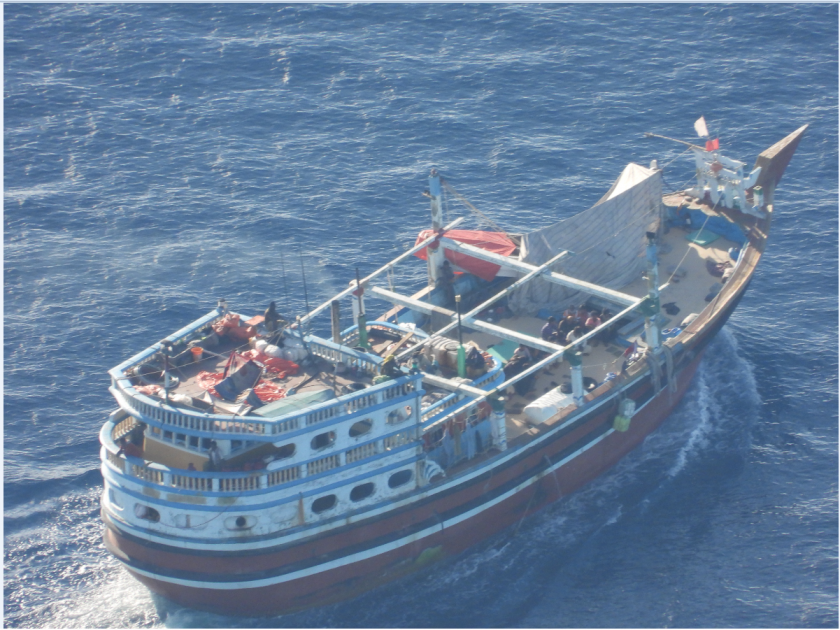
On 24 March, Operation ATALANTA was informed that an Iranian-flagged dhow was hijacked by a Pirate Action Group 400 nautical miles East of Mogadishu. The modus operandi reflected a highly likely use of the hijacked fishing vessel as mothership, proceeding to high seas and attempting to pirate larger vessels.
Vessels operating in the vicinity were contacted by Maritime Security Centre Indian Ocean (MSCIO) to avoid transiting within a 200 nautical miles radius of the reported position of the hijacked dhow. In addition, MSCIO recommended maintaining enhanced vigilance, being prepared to implement Best Management Practices for Maritime Security and report any suspicious activity immediately.
On 25 March, EUNAVFOR Operation ATALANTA asset closed distance, ready to take the appropriate actions to respond effectively to the piracy event.
On 27 March, 48 hours later, ATALANTA asset located the dhow 480 nautical miles Southeast of Mogadishu and verified the identity. During the following days, the warship closed distance to the Iranian-flagged fishing vessel and maintained a cover posture. Meanwhile her embarked air means were gathering relevant information to assess the situation on board.
At the same time, the second EUNAVFOR ATALANTA asset started to move from the Gulf of Aden, her designated patrolling area, to the hijacked dhow latest location in order to join the counter-piracy operation as soon as possible.
Since 30 March, the ATALANTA assets confirmed the hijack of the dhow, which remained totally isolated and any possibility of pirating a larger vessel was disrupted.
At the time of publication of this newsletter, the dhow were anchored close to the northern coast of Somalia, close monitored by the ATALANTA assets, which were in permanent contact with the Somali police forces.
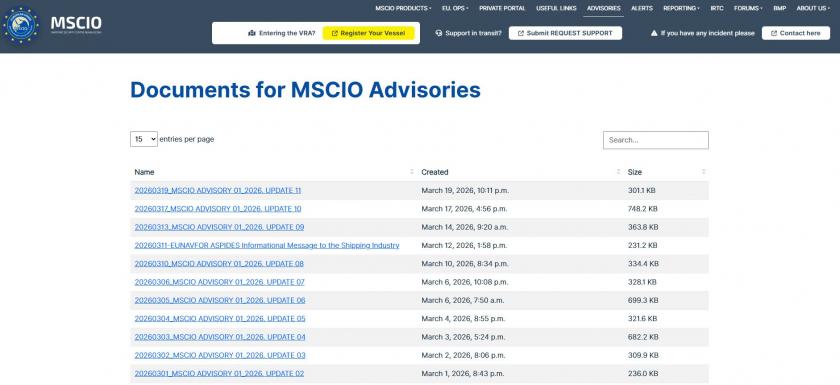
In March, the EUNAVFOR ATALANTA Maritime Security Centre Indian Ocean (MSCIO) published on the MSCIO website up to 10 updates of the ATALANTA advisories related to multiple incidents happened in the region.
These documents provide updates of the ongoing maritime security environment affecting commercial shipping, based on information promulgated by maritime security reporting centres, military authorities and reports received directly from masters of merchant vessels in their transit.
In addition, EUNAVFOR Operation ATALANTA social media and website promoted the alerts reported and published by MSCIO. Those alerts are produced in close cooperation with United Kingdom Maritime Trade Operations (UKMTO), and underlines the importance of real-time communication and coordinated efforts among regional and international maritime security stakeholders to ensure the security of vessels transiting high-risk areas.
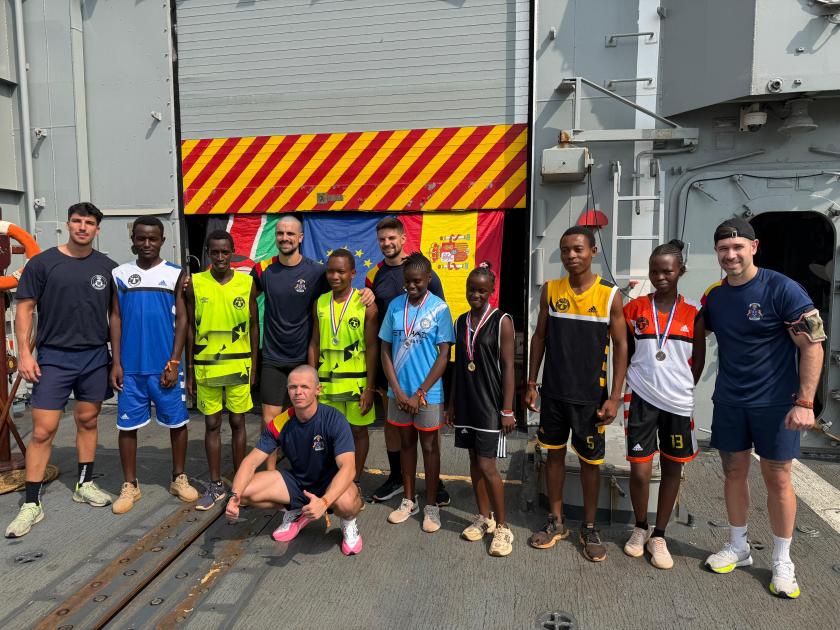
On 17 March, during a port visit in Mombasa, EUNAVFOR ATALANTA ESPS CANARIAS personnel enjoyed some activities with local communities, including a visit on board and a race together with a local running training club people. These activities let ATALANTA create robust ties with civilian, sharing experience and make closer the Operation to those communities.
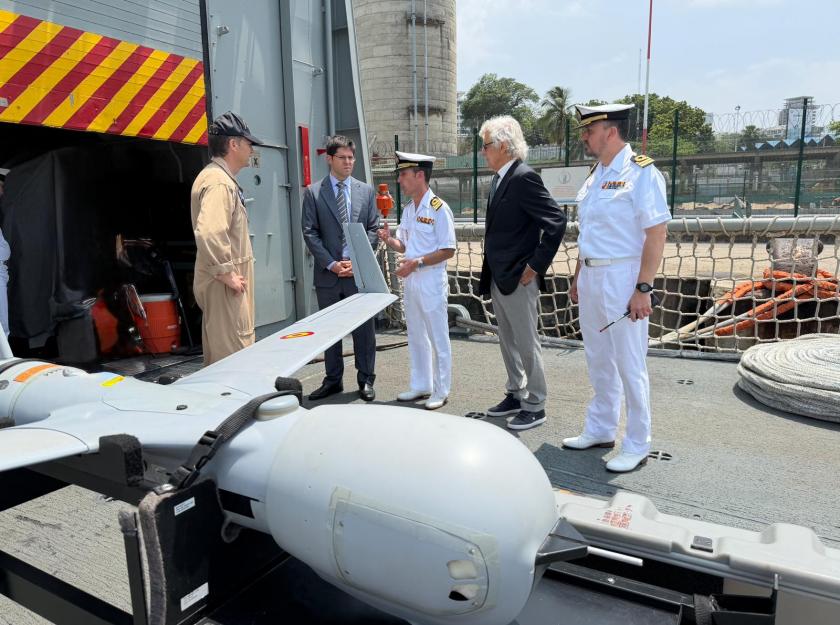
Following the activities at the port of Mombasa, the ATALANTA asset ESPS CANARIAS Commanding Officer received on board the Spanish Ambassador to Kenya, H.E. Jaime Moreno Bau. He learned first-hand the means and capabilities of the warship and met several crewmembers to know their duties on board.
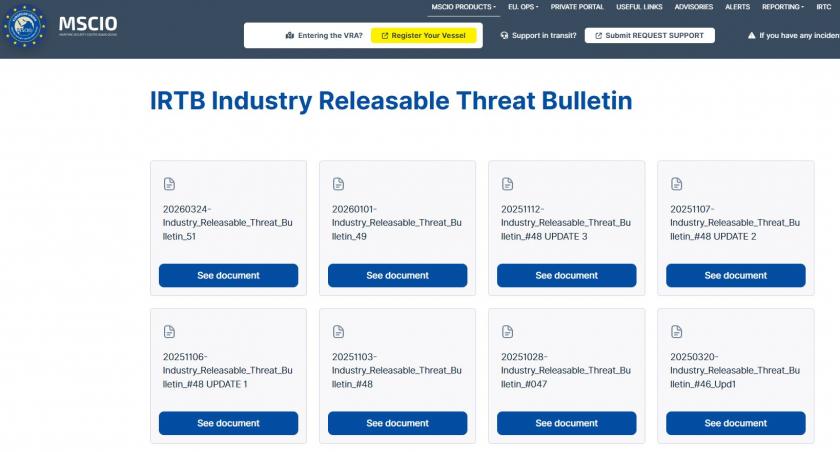
On 26 March, Operation ATALANTA social media share the Industry Releasable Threat Bulleting number 51 related to the piracy incident happened 400 NM East Mogadishu. According to information received on 24 March, a pirate action group (PAG) consisting of an unknown number of Somali pirates (possibly 10-15) attacked and hijacked an Iranian type fishing vessel (dhow).
The case remains under investigation by EUNAVFOR ATALANTA, with additional details still being gathered. However, preliminary indicators suggest the incident was likely an opportunistic hijacking intended to repurpose the dhow as a mothership to facilitate subsequent piracy operations.
This Industry Releasable Threat Bulletin (IRTB) has been written in coordination between Combined Maritime Forces (CMF) and European Union Naval Force (EUNAVFOR) ATALANTA. It is intended to help shipping operators who are responsible for merchant and large commercial fishing vessels that pass through or operate in the Western Indian Ocean, Gulf of Oman, Red Sea and Gulf of Aden.
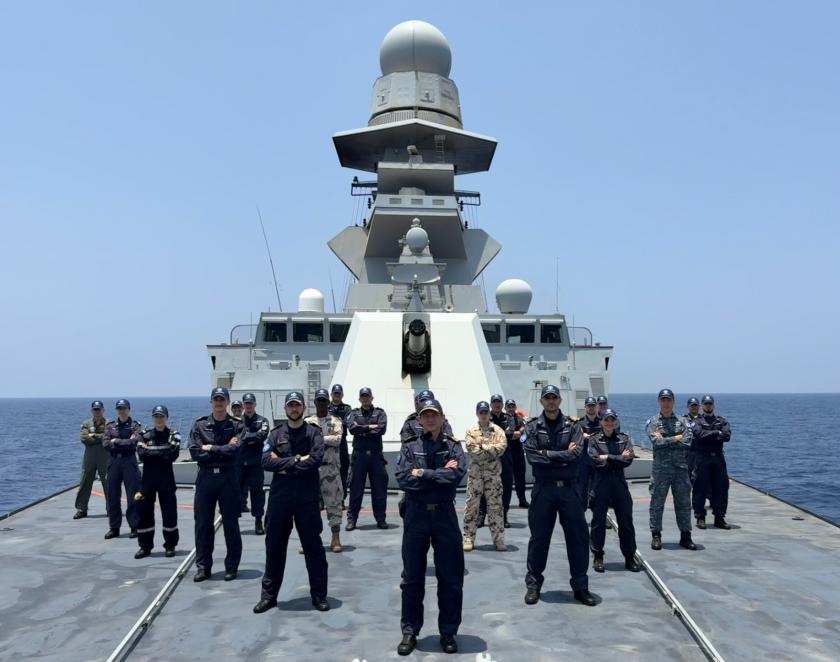
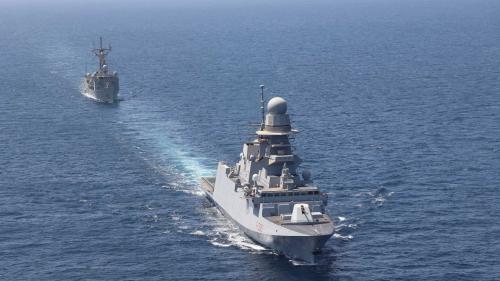
In March, EUNAVFOR ATALANTA was supported in different levels by ships from Spain, Italy, France and Greece.
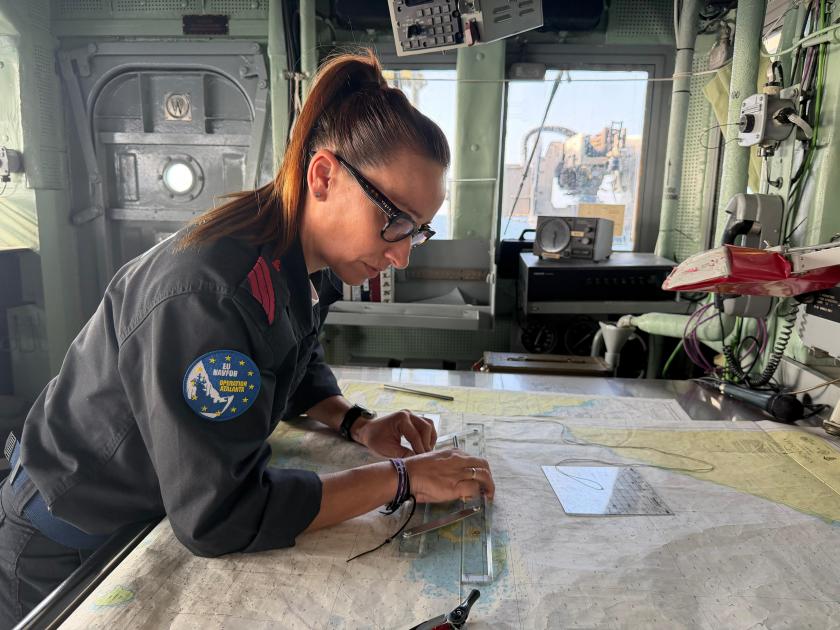
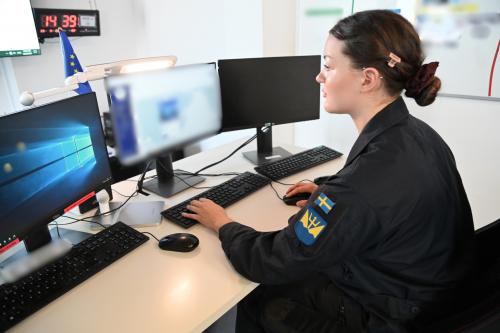
On 8 March, Operation ATALANTA joined the commemoration of the International Women's Day, expressing the sincere pride in being part of the global effort for women’s equality in any field.
Defending gender equality and Women's right means defending Europe. For the EU and partner countries, advancing women’s rights, access to justice and inclusive leadership strengthens institutions, builds trust, and enhances our collective capacity to respond to security, development and humanitarian challenges. Advancing rights, justice and action for all women and girls strengthens Europe, secures our neighbourhood and reinforces our global partnerships.
In March, EUNAVFOR ATALANTA celebrated the following national days: