Dear reader,
November brought three notable incidents in the Area of Operations that clearly illustrate what ATALANTA is doing today, and how we use efficiently our resources. Through three very different scenarios, we were able to demonstrate the commitment, evolution and effectiveness of Operation ATALANTA as a broader maritime security provider in the Western Indian Ocean.
The most significant incident was the successful solution of the pirate attacks on the Maltese-flagged tanker HELLAS APHRODITE and the Iranian-flagged fishing dhow ISSAMOHAMADI. The counter piracy operation involved ATALANTA’s main assets alongside with the Indian Navy, a Japanese P-3C aircraft from the Combined Maritime Forces, the Seychellois Air Force and Somali authorities. Past efforts came to fruition, allowing us to gather information at an early stage, coordinate with other maritime security partners the necessary actions, and prepare the most suitable response. The release of both vessels and their crews without harm is a collective success that makes everyone involved genuinely proud.
A key part of ensuring the best possible end of an incident at sea is the capacity-building exercises conducted with regional countries. In November, ATALANTA led the regional maritime security exercise USALAMA BAHARINI, supported by the Kenyan Navy and Kenyan Coast Guard. This regularly planned exercise represents another success for the Operation's leadership as a recognised and trusted contributor to maritime security. Later, ATALANTA also participated in Operation USALAMA BAHARINI alongside Kenyan Navy units and supporting Regional Coordination Operation Centre (RCOC) Seychelles.
Finally, the rescue of a Yemeni fishing dhow in the waters of the Gulf of Aden highlights another important role of ATALANTA, the ability to handle any type of alert at sea, and to provide the most appropriate response. After coordinating with the Yemeni Coast Guard, and considering the elevated piracy threat level in the area, ATALANTA provided the necessary assistance and towed the dhow in distress to a safe port.
Together, these diverse activities are the result of the daily work carried out at multiple levels by a team dedicated to improve maritime security in a region of great interest to the European Union.
Vice Admiral Ignacio Villanueva Serrano
EUNAVFOR ATALANTA Operation Commander
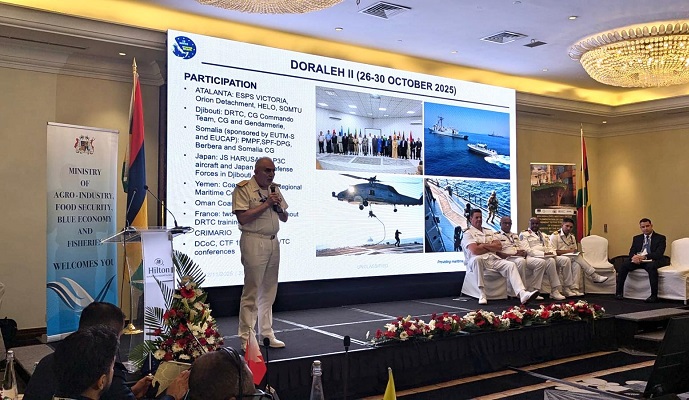
From 12 to 14 November, Operation ATALANTA Deputy Commander, Rear Admiral Paolo Fantoni participated in the 8th High-Level Meeting on the Implementation of the Jeddah Amendment to the Djibouti Code of Conduct (DCOC/JA), held in the Republic of Mauritius. In one of the panels, he took part providing an update about the state of play of the Operation and its most recent activities.
The High-Level Meeting was jointly organised by the International Maritime Organisation (IMO), the Republic of Mauritius, and the Indian Ocean Commission (IOC), and sponsored by the European Union through the Safe Seas for Africa programme.
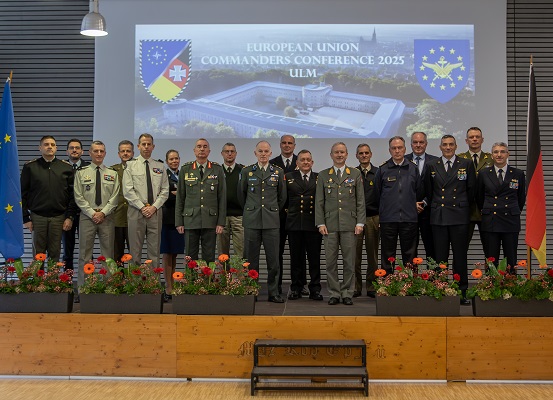
On 26 and 27 November, EUNAVFOR ATALANTA Operation Commander took part in the annual EU Commanders’ Conference, in Ulm (Germany). The conference was chaired by the Director General of the EU Military Staff, Lieutenant General Michiel van der Laan, bringing together the commanders of all EU missions and operations to review the current state of play, share recent achievements, and discuss concerns and upcoming challenges.
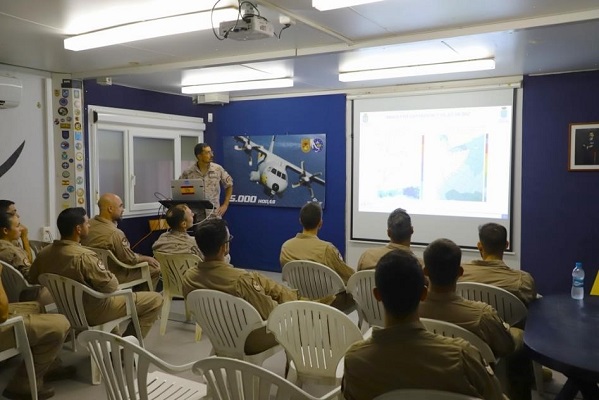
In early November, EUNAVFOR ATALANTA forces participated in the BULLSHARK 2025 exercise in Djibouti. The international exercise is led by the US Combined Joint Task Force Horn of Africa (CJTF-HOA), with the participation of EUNAVFOR ATALANTA and other international partners such as Djibouti, France and Japan. Its aim is to strengthen global partnerships and sharpen readiness across one of the world’s most strategic regions.
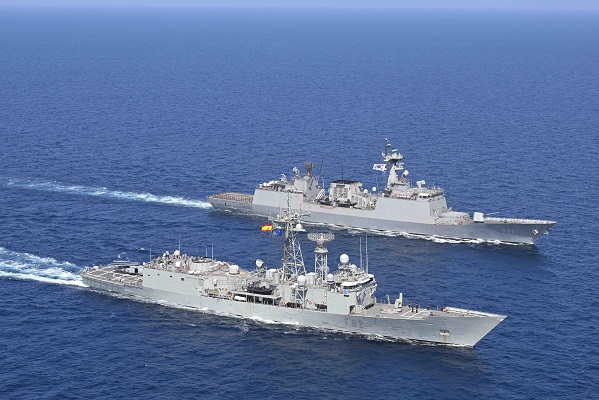
On 5 November, EUNAVFOR ATALANTA flagship ESPS VICTORIA conducted a joint activity at sea with the South Korean warship ROKS CHOI YOUNG, part of the Combined Maritime Forces - Task Force 151.
These regular exercises are essential for improving interoperability and synergies at sea.
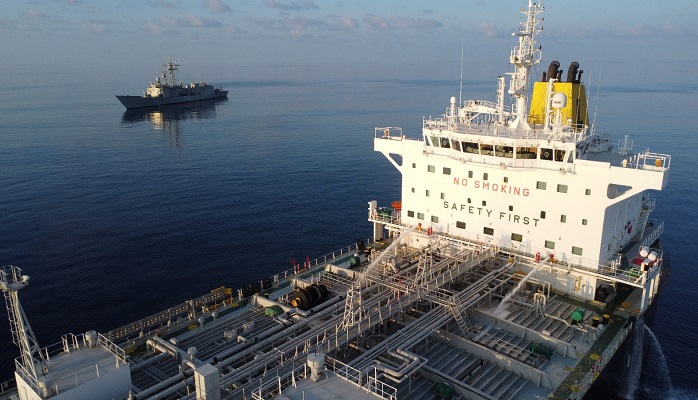
On 7 November, Operation ATALANTA forces freed the Maltese-flagged tanker HELLAS APHRODITE and her crew.
The piracy attack took place in the morning of 6 November, when the tanker was boarded by group of pirates. The assault occurred approximately 700 nautical miles East of Mogadishu. When Operation ATALANTA received the alert, surface and air assets were immediately tasked with taking the appropriate actions to respond effectively and lead the efforts.
After an early show of force, the pirates abandoned the tanker. The crew, consisting of 24 persons, had succeeded in taking refuge in the citadel. This is a dedicated secure room where they stayed secure and without harm and in direct contact with ATALANTA OHQ until released.
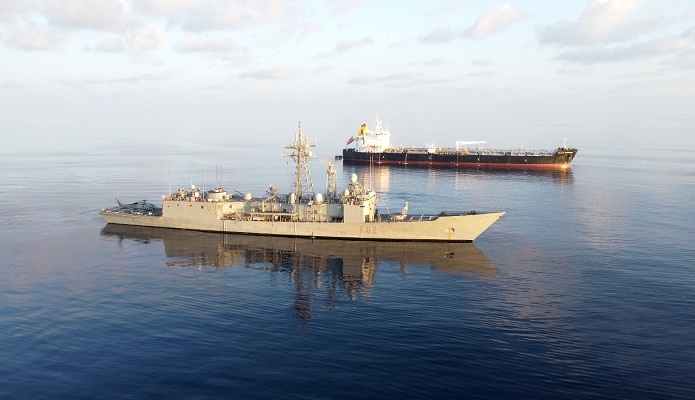
ATALANTA’s flagship ESPS VICTORIA with her organic helicopter, the Uncrewed Aerial Vehicle (UAV), the Maritime Patrol and Reconnaissance Aircraft, and the Special Operations Team were involved in the liberation of the Merchant Tanker.
Cooperation with regional and international forces in the area was crucial for the release of the tanker. In the operation participated Puntland police authorities, a Japanese P-3C aircraft from the Combined Maritime Forces, the Seychelles Maritime Reconnaissance Patrol Aircraft, and the Spanish Joint Operations Command. ATALANTA Headquarters maintained direct communications with flag state authorities of HELLAS APHRODITE, her owner, and the crew.
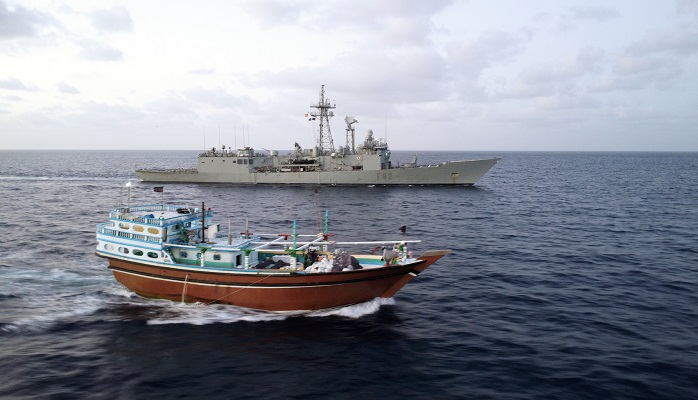
On 11 November, the Iranian-flagged dhow ISSAMOHAMADI that was used as a mother ship in the piracy incident involving the tanker HELLAS APHRODITE was freed. ESPS VICTORIA’s medical team examined the crewmembers, who were in the hands of the perpetrators for more than two weeks. The dhow, which was earlier abandoned by the pirates on the North-Western coast of Somalia, was closely tracked and monitored by the Operation’s flagship ESPS VICTORIA, and an Indian Navy warship.
The criminal activities of this group of pirates were definitely disrupted.
ATALANTA forces gathered evidence of the incident on the dhow. Together with the evidence collected on board of HELLAS APHRODITE, it will be available to appropriate authorities in support of any legal prosecution of the perpetrators, if detained. To this end, ATALANTA continues working with the Federal Government of Somalia and Puntland Federal Government to apprehend the suspected pirates.
As in the HELLAS APHRODITE incident, the successful coordination with regional and international partners was paramount to achieve the desired outcome.
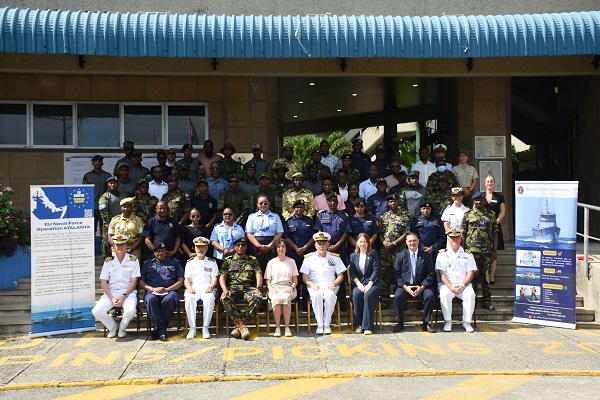
From 17 to 20 November 2025, the second iteration of exercise USALAMA BAHARINI took place in Mombasa, Kenya. The exercise allowed ATALANTA and Kenyan maritime actors to strengthen cooperation, boost maritime security and enhance operational capabilities. National, and international stakeholders, including INTERPOL, UNODC and CMF worked together in protecting the Western Indian Ocean.
The opening ceremony was held at the Bandari Maritime Academy in Mombasa in the presence of the Kenya Navy Fleet Commander, Brigadier General Mohammed Shemote, the European Union Delegation to Kenya’s Head of Political, Press and Information, Ms. Cristina Barrios, and ATALANTA Deputy Commander Rear Admiral Paolo Fantoni.
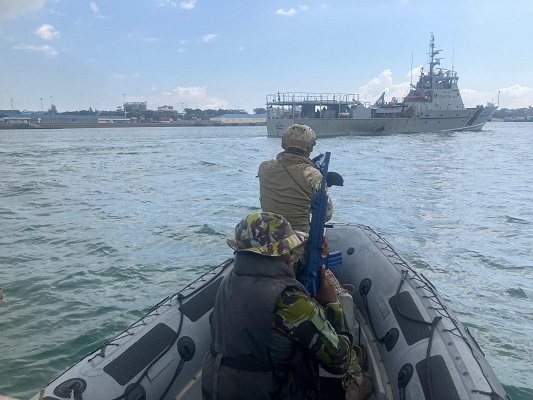
USALAMA BAHARINI II exercise included several legal seminars and training sessions to improve the knowledge and capacities in maritime security of the participants. The training sessions included tactical exercises on Visit, Board, Search and Seizure (VBSS) procedures, documentation check, compliant and non-compliant boarding, and restraint detainee handling. On the last day, a joint activity at sea took place between ESPS VICTORIA and KNS SHUPAVU.
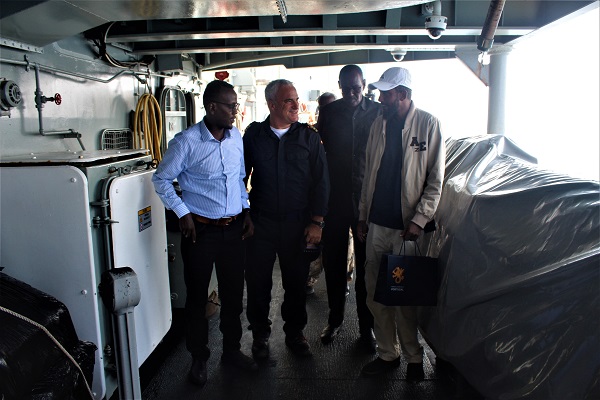
On 27 November, EUNAVFOR ATALANTA met the District Commissioner of Jariiban, the commander of the district of Jariiban, the Port Commander of Garacad, and the Director of the Ministry of Environment, Greenery and Climate Change of the Federal Member State of Puntland on board the Operation flagship ESPS VICTORIA off the coast of Garacad, Puntland (Somalia).
They discussed issues crucial to coastal communities such as piracy, illegal fishing activities, pollution of the marine ecosystem and the effects of climate change, as well as cooperation and effective exchange of information.
Meetings with local and regional authorities are taking place regularly and enable the Operation's efforts to be coordinated with the needs of coastal communities. ATALANTA remains firmly committed to supporting the development of these communities.
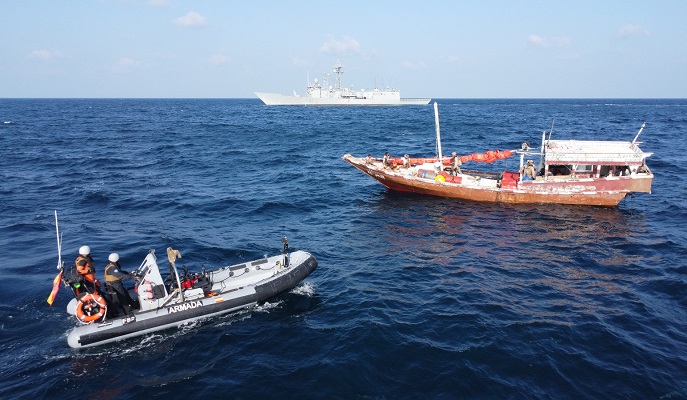
On 29 November, Operation ATALANTA assisted successfully a Yemeni dhow that had suffered a severe technical breakdown in the Eastern Gulf of Aden.
A warning about a dhow gone missing during her transit to Socotra was issued a few days earlier by the Yemeni Coast Guard and the Regional Maritime Information Sharing Centre (REMISC) in Yemen. Since then, Operation ATALANTA had been monitoring the situation at sea, and could locate the dhow after a search carried out with ATALANTA's air assets.
ATALANTA’s assessed the piracy threat in the area as moderate, with a possible active group of pirates in that area. Operation ATALANTA mandate includes the executive task to protect vulnerable vessels, and committed to this task, the Operation’s flagship towed the dhow to a safe location.
This measure was coordinated with the master of the dhow and responsible Yemeni and Somali authorities. The crew remained safe and unharmed.
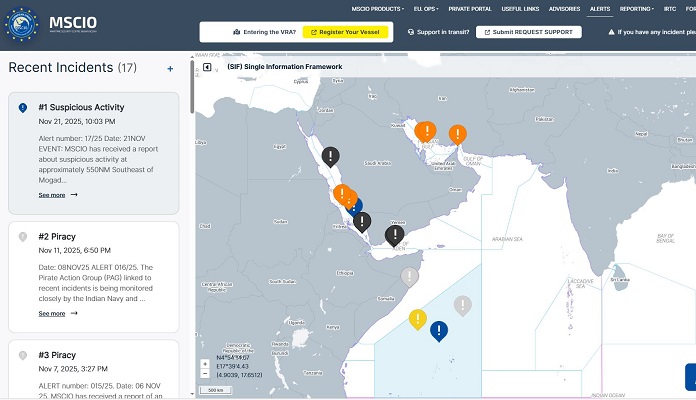
In November, EUNAVFOR Operation ATALANTA social media and website promoted the alerts reported and published by Maritime Security Centre Indian Ocean (MSCIO) related to recent incidents happened in the Area of Operations, as the one involving HELLAS APHRODITE.
The MSCIO alerts are always produced in close cooperation with United Kingdom Maritime Trade Operations (UKMTO), and underlines the importance of real-time communication and coordinated efforts among regional and international maritime security stakeholders to ensure the security of vessels transiting high-risk areas.
Operation ATALANTA strongly recommends merchant and other vulnerable vessels to register in the MSCIO's Voluntary Registration Scheme (VRS), to provide the most effective monitoring and response by ATALANTA forces and their partners in countering maritime security threats.
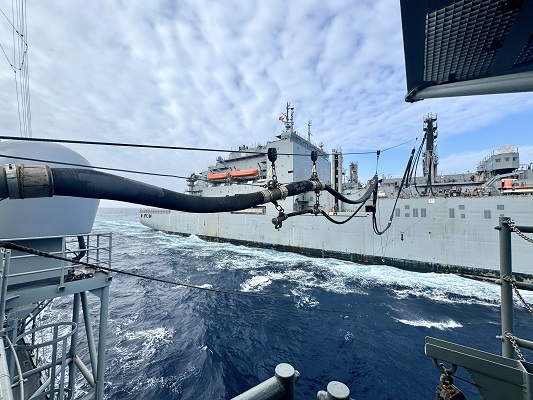
In early November, EUNAVFOR ATALANTA flagship ESPS VICTORIA conducted a Replenishment at Sea (RAS) with the USNS CARL BRASHEAR in the Western Indian Ocean. This manoeuvre requires a complete synchronisation, mutual knowledge of the procedures, and maximum precision to ensure its success.
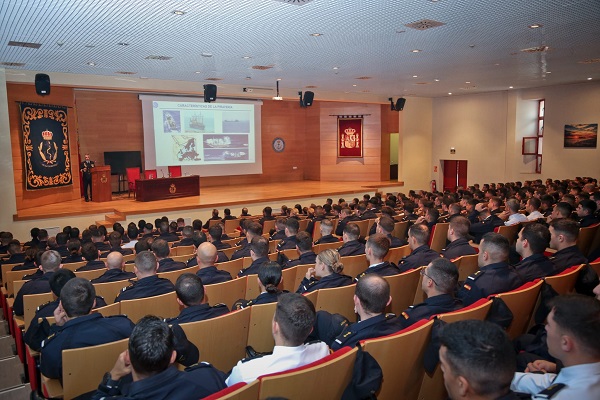
On 17 November, EUNAVFOR ATALANTA Chief of Staff provided a lecture at the Spanish Non-Commissioned Officers (NCO) Naval school, in San Fernando (Spain). Captain Fernando García Rodríguez presented Operation ATALANTA to the students, its success and evolution over the years, and the challenges it has to face in the future as a contributor to maritime security in the Western Indian Ocean.
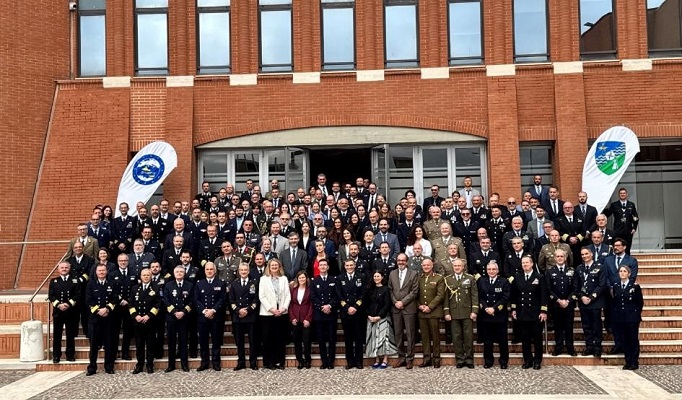
On 18 November, EUNVAFOR ATALANTA representatives participated in the 14th SHADE MED, organised by EUNAVFOR Operation IRINI in Rome (Italy). This time the t topic was “The Mediterranean Space: A Pillar of Global Security.”
The SHADE MED Conference is an annual high-level forum that underscores the European Union’s commitment to fostering dialogue and cooperation on Mediterranean security. More than a traditional international meeting, SHADE MED serves as a unique platform for sharing insights, experiences, and information among representatives from nations and organisations engaged in the Mediterranean region.
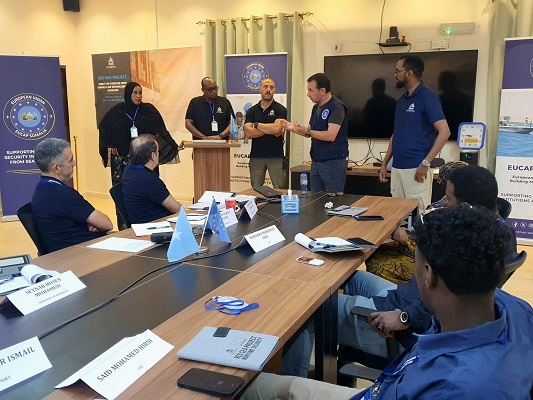
From 23 to 25 November, EUNAVFOR ATALANTA representatives participated in a maritime security table top exercise led by INTERPOL under the EU funded Red Sea Project. The exercise was conducted in Bossasso, Puntland (Somalia), and brought together a range of Somali and international partners.
The three-day simulation strengthened coordination, information-sharing and joint responses to maritime incidents and, in particular, on Illegal, Unregulated and Unregistered (IUU) fishing.
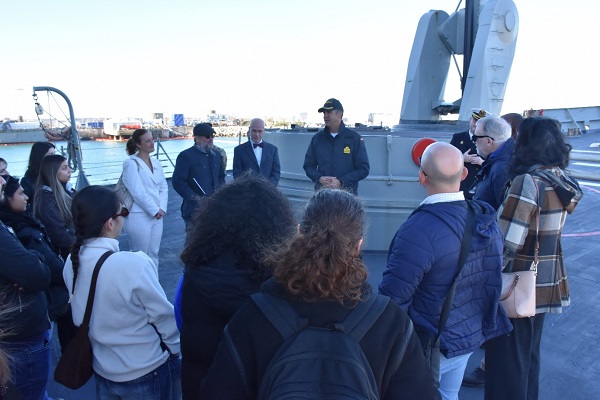
On 28 November, students of the Master Degree in International Relations and Migrations of the University of Cadiz (Spain) visited the EUNAVFOR ATALANTA Operation Headquarters (OHQ). They could learn first-hand about the crucial work of political advisors in support of the Operation Commander, as well as gain insights into the complex geostrategic situation in the Area of Operation.
Before the OHQ, they had the opportunity to see the Spanish frigate ESPS REINA SOFIA, which has taken part in the Operation on several occasions.
On 25 November, Operation ATALANTA joined the European External Action Service media campaign on the International Day for the Elimination of Violence against Women, highlighting the importance to break the silence and end the violence.